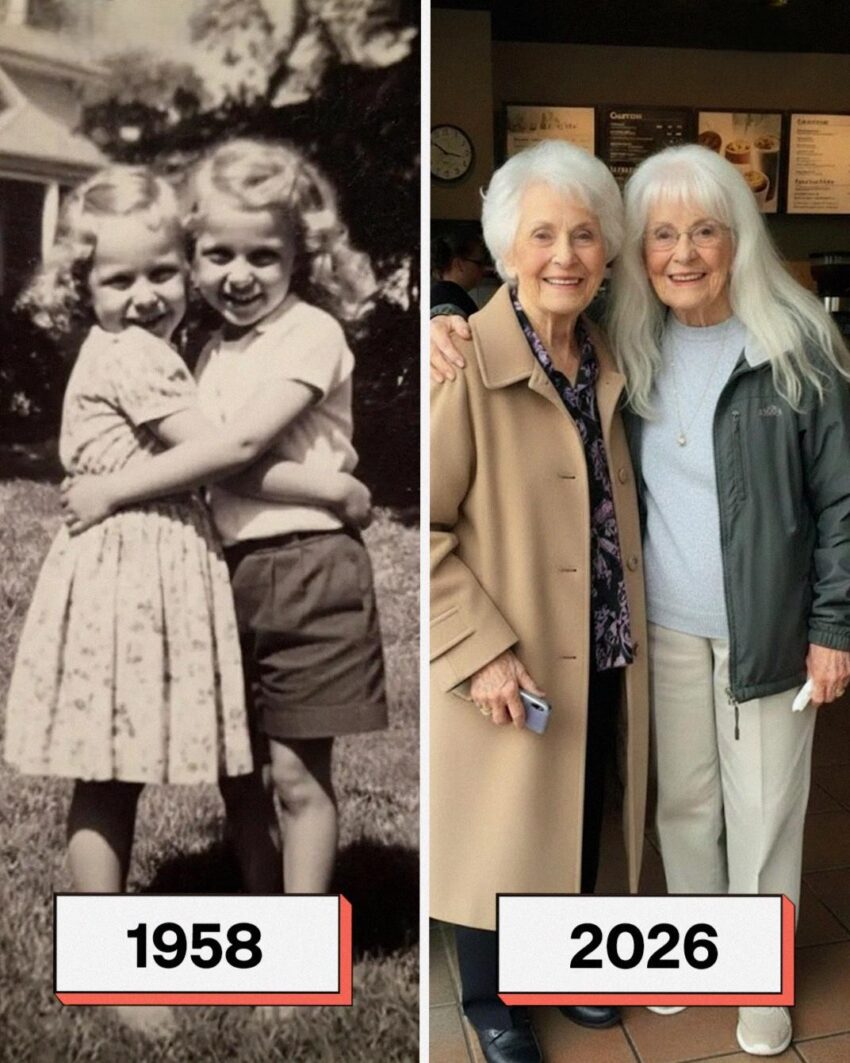
When I was five years old, my twin sister walked into the dense thicket of trees behind our house and never came back. The police eventually told my parents her body had been found, but I never saw a grave, never saw a coffin, and never saw a shred of evidence. What followed were decades of a heavy, suffocating silence—a family history rewritten to exclude her existence. I’m Dorothy, now 73, and for nearly seven decades, my life has been defined by a missing piece shaped like a little girl named Ella.
Ella and I weren’t just sisters; we were share-a-soul twins. If she tripped, my knee would sting. If I laughed, she’d be the one to double over. She was the brave one, the vanguard, and I was her shadow. The day she vanished, we were staying with our grandmother while our parents worked. I was bedridden with a fever, my throat feeling like it was lined with glass. I remember the soft, rhythmic thump-thump of Ella bouncing her favorite red ball against the bedroom wall. It was a comforting, domestic sound that lulled me into a deep, medicinal sleep.
When I woke up, the atmosphere of the house had shifted. The rhythmic thumping had stopped. The humming was gone. The air felt thin and cold. I called for Grandma, but she didn’t answer immediately. When she finally appeared, her face was a mask of frantic composure. She told me to stay in bed, but I heard the back door fly open and her voice rising in a desperate crescendo as she screamed Ella’s name into the gathering rain.
Then came the flashlights and the sirens. The woods behind our house, which we had always viewed as a playground, were suddenly transformed into a dark, predatory “forest.” Neighbors and officers combed the brush, their voices echoing through the trunks. The only thing they ever found was that red ball, abandoned in the dirt.
Days bled into weeks. I remember Grandma weeping at the kitchen sink, whispering apologies to the dishwater. When I finally worked up the courage to ask when Ella was coming home, my mother’s hands froze mid-task. My father walked in and ended the conversation with a sharp, final snap. Later, they sat me down and told me the police had “found” her in the forest. “She’s gone,” my mother whispered. “She died, Dorothy. That’s all you need to know.”
Her toys were packed away overnight. Our matching outfits disappeared. Her very name became a forbidden word, a bomb that threatened to level the house if dropped in conversation. I grew up in that vacuum, learning that my grief was an inconvenience to my parents’ fragile peace. When I was sixteen, I tried to reclaim her. I walked into the local police station and asked to see the case file. The officer looked at me with a pity that felt like an insult. “Some things are too painful to dig up, sweetheart,” he said. “Let your parents handle it.”
I spent the next fifty years building a “full” life. I married, raised children, and became a grandmother. But there was always a quiet corner of my heart reserved for the twin I wasn’t allowed to mourn. I would catch myself setting an extra plate at dinner or staring into the mirror, wondering if the wrinkles on my face were the same ones Ella would have worn. My parents took their secrets to their graves, leaving me with a childhood that felt like a book with the middle chapters ripped out.
The resolution to this seventy-year mystery didn’t come from a detective or a cold case file; it came from a cup of coffee. My granddaughter had moved to another state for college, and I had flown out to help her settle in. One morning, while she was in class, I wandered into a crowded, sunlit café. I was standing in line, half-reading a chalkboard menu, when I heard a woman’s voice ordering a latte.
The rhythm of her speech sent a jolt of electricity down my spine. It was my voice, just slightly more raspy. I looked up, and time simply stopped. Across the counter stood a woman with gray hair twisted into a knot. She had my height, my posture, and my exact nose. When she turned to face me, we locked eyes, and I felt as though I were looking into a mirror that reflected a life I hadn’t lived.