For a few seconds, I couldn’t move. My palms stayed pressed against my thighs as if I’d been stuck to the chair. Ethan Reese. The man who once promised me forever, only to reduce it to a custody schedule and child support transfers labeled for Mia’s expenses.

Director Ellison studied me closely. “Ms. Hart… is there a concern I should be aware of?”
“There’s a history,” I said, measuring each word. “But that’s not the point. The point is my child is being hurt.”
Ms. Carver lowered her eyes to her lap. I caught it—guilt, or fear, maybe both.
“I want to speak with Noah’s parent,” I said.
Director Ellison pressed her lips together. “We can schedule a conference.”
“No,” I said. “Now.”
She paused just long enough to confirm what I already suspected: Ethan had influence here. Donations. Connections. The sort of pull that softened consequences and blurred accountability.
Director Ellison rose. “All right. I’ll ask Mr. Reese to come in.”
When she stepped out, I turned to Ms. Carver. “Please don’t give me the ‘kids will be kids’ line. If you’ve seen something, tell me.”
Ms. Carver swallowed. “Noah takes things,” she admitted softly. “He’s… possessive. He shoves. When adults intervene, he cries and says Mia was ‘mean’ first.”
“And you believed him?”
“We’re instructed to document patterns and redirect,” she said, her voice thin. “We’ve redirected.”
Redirected. My daughter’s bruises were being “redirected.”
The door opened and Ethan entered like he owned the place. Khaki slacks, crisp navy quarter-zip, the same watch he’d bought after our divorce like a prize. He looked at me, startled for only a second before his face settled into practiced composure.
“Lauren,” he said, as if we’d run into each other at the store.
“Ethan,” I replied. My throat tightened, but my voice stayed steady. “Your son is bullying our daughter.”
His eyes narrowed. “Noah isn’t a bully.”

Director Ellison lingered by the desk, suddenly fascinated by her pen holder. Ms. Carver sat stiffly.
“I saw bruises,” I said. “Mia is coming home without her things. She’s afraid.”
Ethan’s mouth curved. “Kids play rough. Mia is sensitive. You’ve always coddled her.”
The words struck with a familiar sting—his old tactic, polished and ready. He used to call me “overdramatic” whenever I asked him to show up, to listen, to care.
“She’s five,” I said. “She’s not ‘sensitive.’ She’s being targeted.”
Ethan leaned back, crossing his ankle over his knee. “What do you want? An apology from a kindergartener?”
“I want it to stop,” I said. “I want supervision. I want consequences. And I want transparency.”
Director Ellison cleared her throat. “We can increase monitoring during recess and encourage restorative conversations.”
Ethan kept his eyes on me. “This is about you,” he said quietly. “You’re still angry. Don’t use Mia to punish me.”
My hands clenched into fists beneath the table. “Don’t you dare.”
His expression flickered—irritation, then calculation. “Look, Lauren. If Noah did something, we’ll talk to him. But I’m not going to let you label my kid because you’re—”
“Because I’m what?” I leaned forward. “Because I’m not impressed by you anymore?”
Silence. Even Director Ellison’s diffuser seemed to fall still.
I stood. “Fine. If you won’t do the adult thing, I will.”
Ethan’s brows rose. “Is that a threat?”
“It’s a promise,” I said.
I walked out before my anger pushed me too far. In the hallway, I knelt to meet Mia at eye level as she lined up with her class for art.
Her eyes searched mine like she sensed something had shifted.
“Sweetheart,” I whispered, tucking her hair behind her ear, “listen to me. You are not in trouble. You did nothing wrong.”
Her lip quivered. “Noah says I have to give him my stuff.”
Heat burned behind my eyes, but I kept my tone calm. “You don’t have to give him anything.”
Mia’s voice grew smaller. “He pushes.”

I took her tiny hands in mine. “If he touches you, you say ‘Stop.’ Loud. And you walk to the teacher. If he tries again—if you can’t get away—then you fight back.”
Her eyes widened. “Fight?”
“Protect yourself,” I said, firm and gentle at once. “You can push his hands away. You can step back and yell. You can make it impossible for anyone to ignore.”
Behind me, I heard a chair scrape—Ethan standing in the doorway, watching.
His face had hardened. Like he’d just heard me declare war.
That afternoon, Mia’s teacher called before I’d even left work.
“Ms. Hart,” Ms. Carver said, breathless, “there was an incident during centers.”
My heart slammed against my ribs. “Is Mia okay?”
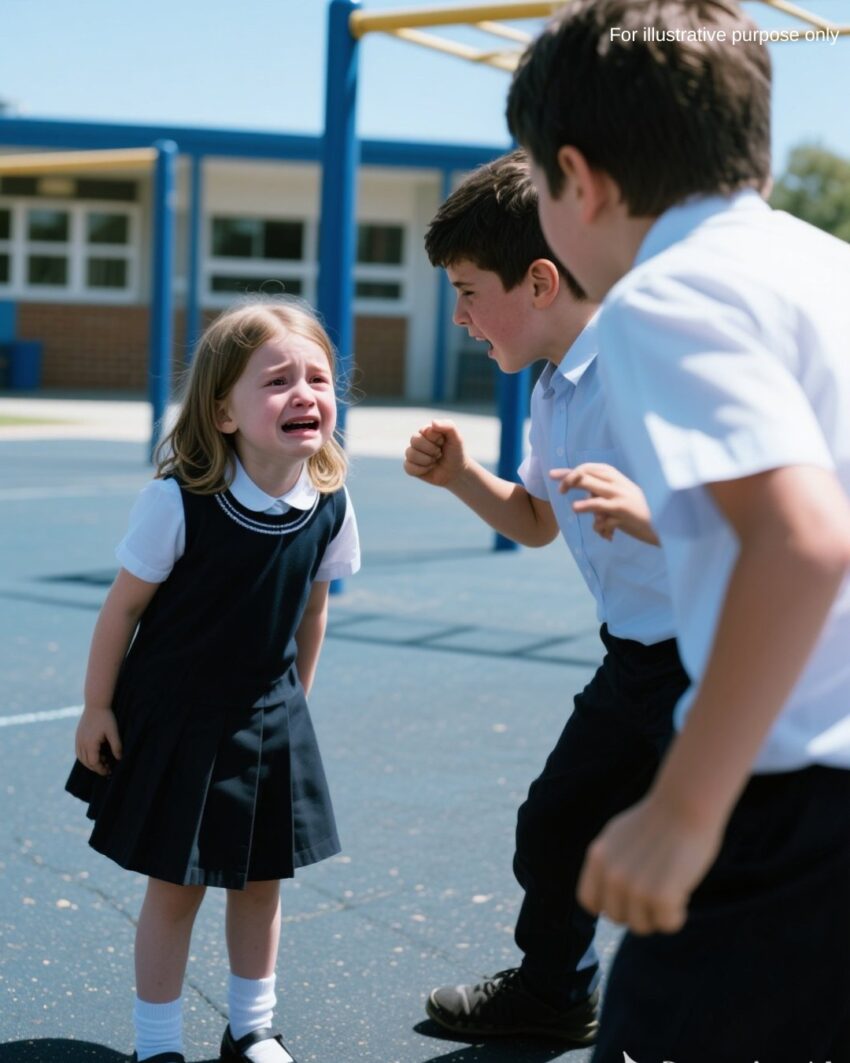
“She’s okay,” Ms. Carver said quickly. “She’s… shaken, but okay. Noah grabbed her crayons and pulled her ponytail. Mia yelled ‘STOP!’ very loudly, and when he tried again she shoved his hands away and moved to me. We separated them immediately.”
Relief and fury surged together inside me. Relief that Mia had used her voice. Fury that it happened again, right after promises of “monitoring.”
“And what happened to Noah?” I asked.
A pause. “Director Ellison wants a meeting at pickup.”
I arrived early. The parking lot overflowed with minivans and SUVs, parents balancing snack bags and tiny jackets. Inside, the hallway buzzed with children’s voices and squeaking sneakers.
Ethan was already there, leaning against the wall near the classroom. Noah stood beside him, cheeks blotchy like he’d been crying. When he saw me, he stared—defiant, curious, unafraid.
Mia came out with her class. She saw me and ran into my arms so hard my knees bent.
“You were loud,” I whispered into her hair.
She nodded, pressing her face into my jacket. “He pulled me.”
“I know,” I said. “You did exactly right.”
Ethan stepped forward. “What the hell did you tell her?” he snapped.
I looked at him over Mia’s head. “I told her she’s allowed to defend herself.”
“You told her to hit my son.”
“I told her to protect herself,” I corrected. “If you had handled your kid, we wouldn’t be here.”
Director Ellison appeared, her smile tight and brittle. “Let’s go to my office.”
Inside, the story tried to soften itself. Director Ellison described it as “two children escalating.” Ethan pushed that narrative hard.
“Noah felt threatened,” Ethan said. “Mia shoved him.”
“She shoved his hands away after he pulled her hair,” I said. “That’s not aggression. That’s self-defense.”
Ms. Carver held a sheet of paper like a shield. “I documented exactly what happened,” she said. “Noah initiated physical contact twice. Mia used a clear verbal stop and moved away.”
Ethan’s jaw flexed. “So now you’re taking sides?”
“I’m stating facts,” Ms. Carver replied, steadier now.
Director Ellison sighed as if facts were inconvenient. “We’ll implement a behavior plan for Noah and have additional staff present during transitions.”
“And consequences?” I asked.
“We don’t use punitive measures at this age,” she said.
I leaned forward. “Then call it whatever you like—boundaries, intervention, a safety plan. But if my daughter is touched again, I’m filing a formal complaint with the district, and I’m requesting the incident logs in writing. I’m also contacting a child advocate attorney.”
Ethan’s eyes flashed. “You’d really go that far?”

“I will go farther,” I said, calm now, because calm cut deeper. “Mia’s safety isn’t negotiable.”
Noah’s lower lip trembled. He looked up at his father. Ethan’s face softened, and I saw it—the part of him that would always protect his child, even if it cost mine, even though Mia was ours.
Director Ellison cleared her throat. “Mr. Reese, we also need your cooperation. Consistency between home and school is essential.”
Ethan exhaled, boxed in by paperwork and witnesses. “Fine,” he said. “I’ll talk to Noah.”
I stood, adjusting Mia on my hip. “Good. And I’ll talk to Mia. Not to make her smaller,” I added, meeting Ethan’s eyes, “but to make her brave.”
On the way out, Mia whispered, “Mommy?”
“Yeah, baby.”
“Am I bad?”
My chest tightened. I kissed her forehead. “No. You are strong. And you’re kind. And you never have to let anyone hurt you just to keep the peace.”
Outside, the sun poured down bright and full. Ethan remained inside the building, behind glass and policies and excuses. But Mia and I walked to the car together—small steps, steady steps—like we were reclaiming something that had always been hers.