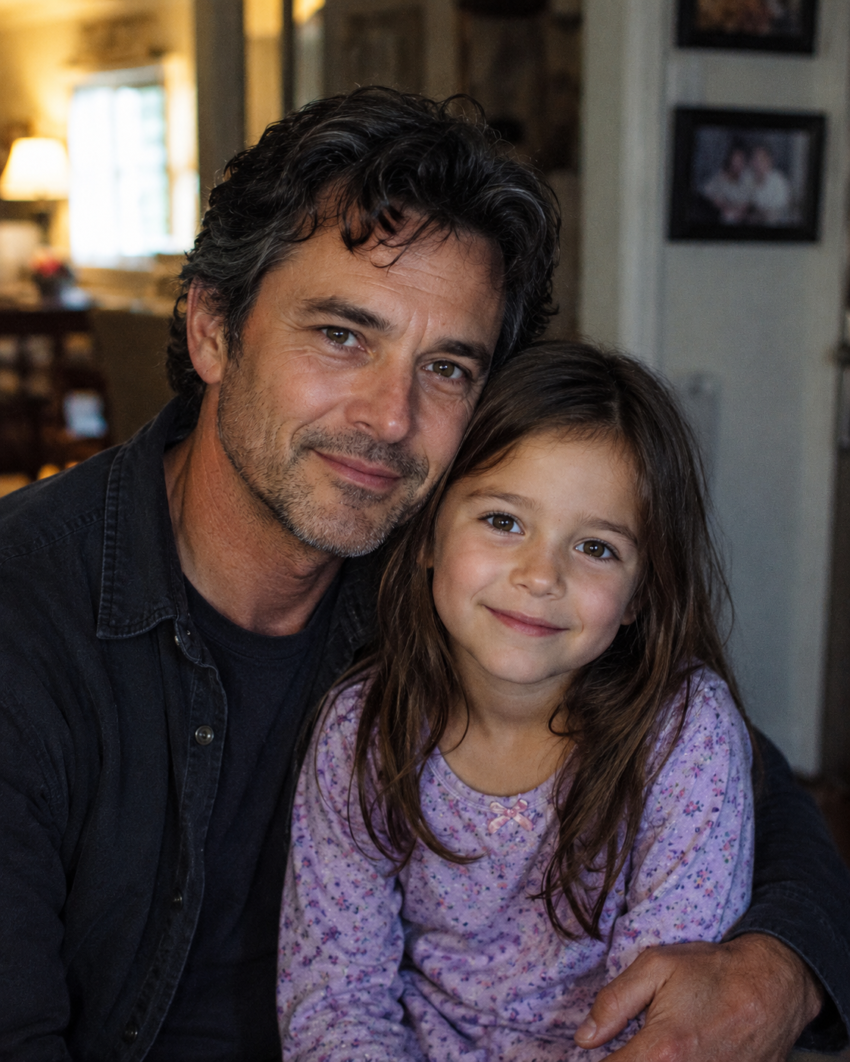
I was six years old the day my father disappeared.
One minute he was sitting at our tiny kitchen table, stirring sugar into burnt coffee while my mother folded laundry nearby. The next, he was carrying a duffel bag out the front door without even looking back at me.
I still remember chasing him barefoot down the driveway.
“Daddy!”
He didn’t turn around.
My mother stood frozen on the porch, one hand pressed against her mouth like she was holding herself together by force. That was the last time I saw him for twenty-five years.
Growing up, my mother never poisoned me against him. Somehow that hurt even more.
She would simply say, “Your father wasn’t ready to be a parent.”
No screaming. No bitterness. Just exhaustion.
But children don’t need details to feel abandoned. I spent years wondering what was wrong with me. Why I wasn’t enough to make him stay.

By the time I turned thirty-one, I’d built a decent life despite it all.
I worked as a physical therapist, owned a small townhouse, and had finally learned how to stop checking crowds for a familiar face.
Then one rainy Tuesday evening, there was a knock at my door.
I opened it and almost didn’t recognize him.
Older. Thinner. Gray hair where dark curls used to be. His shoulders looked collapsed inward somehow, as though life itself had been pressing down on him for decades.
But his eyes were the same.
“Emily?” he asked softly.
My stomach dropped.
For a second, six-year-old me came roaring back.
“What do you want?”
He looked down at his shoes. “I know I don’t deserve this, but… I was hoping we could talk.”
I should’ve slammed the door.
Instead, I let him in.
Over coffee, he apologized. Not with dramatic speeches or excuses. Just quiet honesty.
“I was selfish,” he admitted. “I kept thinking I’d come back once I got my life together. Then too much time passed, and shame kept me away.”
I wanted to hate him.
But grief is strange. Sometimes the child inside you keeps hoping long after the adult knows better.
A week later, he mentioned he’d been staying in cheap motels since losing his apartment.
Against every instinct I had, I offered him my guest room.
Maybe I wanted answers.
Maybe I wanted a father.
Maybe I just wanted those empty years to mean something.
At first, things were awkward. We danced around each other politely, like strangers forced to share a waiting room.
Then one night, about three weeks after he moved in, I woke up thirsty around midnight.
As I walked toward the kitchen, I heard his voice from the hallway.
Low. Urgent.
“She still believes me,” he whispered into the phone. “Just give me two weeks.”
I froze.
Every horrible possibility hit me at once.
Was he scamming me? Planning to steal from me? Was this entire reunion fake?
I barely slept that night.

The next morning, his phone sat unattended on the kitchen counter while he showered upstairs.
I stared at it for nearly a minute before picking it up.
No passcode.
My hands shook as I opened his email.
The first thing I saw made my breath catch.
Oncology appointments.
CT scan results.
Hospice intake paperwork.
Stage 4 pancreatic cancer.
I sank into a chair, numb.
He’d known for four months.
Four months before he ever knocked on my door.
Suddenly, the whispered phone call sounded different in my head.
I opened his banking app next.
There were monthly transfers going back years.
To my mother.
Every single month.
I stared at the screen in disbelief.
My entire childhood, my mother had insisted he never paid child support. Never helped. Never cared.
But he had been sending money all along.
Then I opened his texts.
Most were with my aunt Linda.
Tell her the truth.
She deserves to know you’re sick.
You can’t keep lying to her.
His replies gutted me.
She still believes me. I don’t want her staying out of guilt.
I heard the bathroom door open upstairs.
A minute later, he walked into the kitchen and stopped cold when he saw me holding the phone.
For a long moment neither of us spoke.
Finally I whispered, “Stage 4?”
His shoulders sagged.
He nodded once.
“I didn’t come here because of that,” he said quietly. “I came because I couldn’t die without seeing you again.”
Tears burned my eyes.
“Why didn’t you tell me?”
“Because I already stole enough from your life,” he answered. “I didn’t want your kindness to come from pity.”
Something inside me broke then healed at the same time.
I stood up and wrapped my arms around him.

For the first time in twenty-five years, my father held me while I cried.
He lived four more months.
Chemo exhausted him. Some days he barely touched food. Other days we sat on the porch for hours talking about everything we’d missed—my college graduation, his failed marriages, the books we both loved without knowing it.
Slowly, he started doing little things fathers are supposed to do.
Making coffee before I woke up.
Texting me to drive safely.
Leaving terrible dad jokes written on sticky notes near my keys.
It sounds ridiculous, but those tiny things healed wounds I thought would stay open forever.
When he died, I held his hand in hospice.
His last words to me were barely audible.
“Thank you for letting me come home.”
A few weeks after the funeral, my aunt Linda called.
“There’s something your mother never told you,” she said carefully.
My chest tightened.
“What?”
“She refused every penny your father sent. Every single check. She mailed them back unopened.”
I felt dizzy.
“Then why were there transfers?”
“Because he kept trying. Eventually he started sending the money to an account in your name. He told me someday he hoped you’d find it.”
The account contained nearly ninety thousand dollars.
But honestly?
That wasn’t what shook me most.
It was realizing my father had spent twenty-five years believing he’d failed me completely… while quietly loving me the only broken way he knew how.
Note: This story is a work of fiction inspired by real events. Names, characters, and details have been altered. Any resemblance is coincidental. The author and publisher disclaim accuracy, liability, and responsibility for interpretations or reliance. All images are for illustration purposes only.