It may look like an ordinary little metal cup, but a thimble has been making one of the most delicate household tasks safer for generations.
Found in traditional sewing kits, this small protective tool has a surprisingly clever design. Its rounded shape shields the finger from painful needle pricks, while the tiny indentations covering its surface help control the needle during hand stitching.
It is a simple invention, but every detail serves a purpose.
What Is a Thimble Used For?
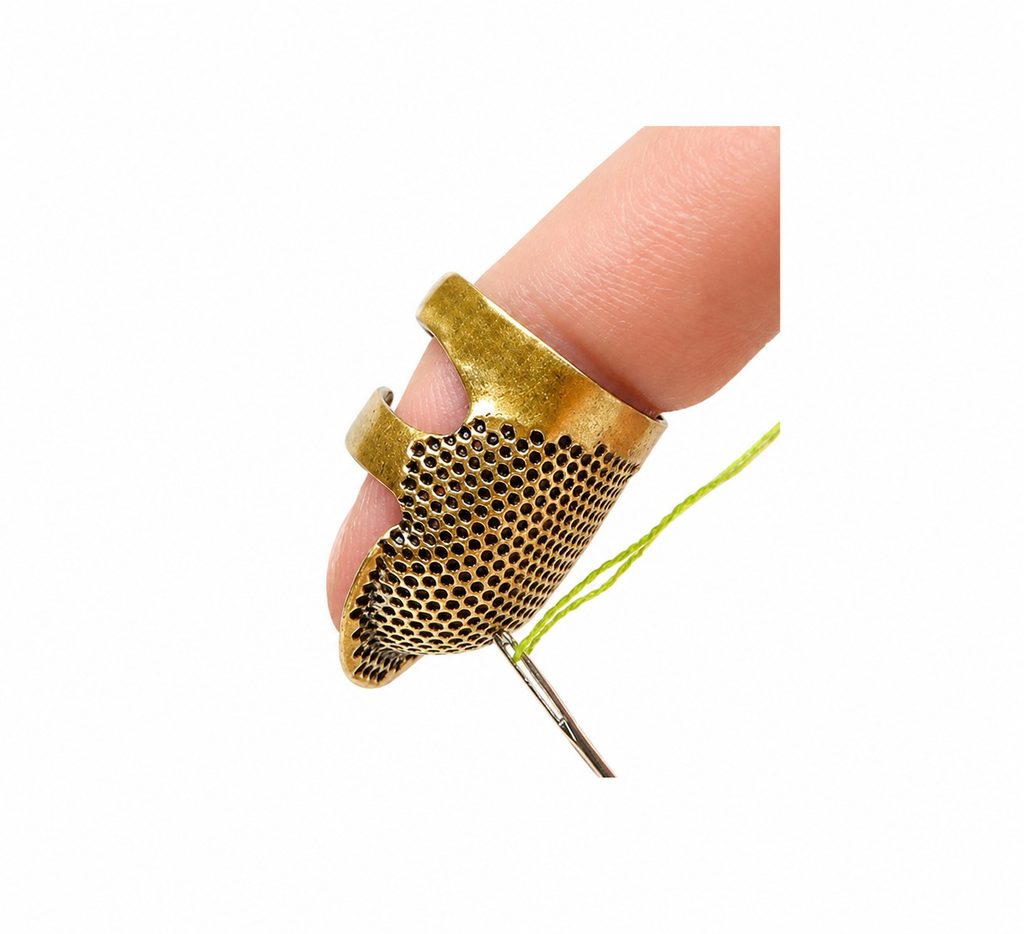
A thimble is a small protective covering traditionally worn on a finger, often the middle finger, while sewing by hand.
Its main job is to protect the finger that pushes the needle through fabric. Without one, repeated pressure from a needle can cause discomfort, soreness, or accidental punctures.
This protection becomes especially useful when working with thick or tightly woven materials that require extra force to push a needle through.
Rather than pressing directly against the needle with bare skin, the sewer uses the firm surface of the thimble to guide it forward.
Why Does a Thimble Have Tiny Dents?
Those little indentations aren’t just decorative details.
They help catch and hold the back end of the needle, providing better grip and reducing the chance of slipping while pushing it through fabric.
This makes the stitching process more controlled and comfortable, particularly when repeated movements are required.
The dimples also help distribute pressure across the thimble’s surface, making it easier to apply force without relying on one small point of contact.
What looks like a collection of tiny dents is actually an important part of the tool’s practical design.
A Small Tool That Made Hand Sewing Easier
Long before modern sewing machines became common, hand stitching was an essential part of everyday life.
People repaired clothing, made household textiles, and created garments using nothing more than needles, thread, and their hands.
Working with thick fabrics could be difficult, especially when a needle needed to be pushed through several layers of material.
A thimble provided an extra layer of protection and made this repeated motion easier to manage.
Although sewing techniques and equipment have changed over time, the basic purpose of the thimble has remained remarkably consistent.
When Practical Tools Became Personal Keepsakes
Thimbles weren’t always plain protective objects.
Over time, some were made in decorative materials and designs, including ornate silver versions that became treasured personal possessions.
These examples showed that even a small everyday tool could have sentimental value.
Some people collected them, while others kept special thimbles as reminders of family members, hobbies, or years spent sewing.
Their appearance could be beautiful, but their usefulness remained at the heart of their design.
The Clever Design Behind an Ordinary Object
A thimble is a perfect example of how thoughtful design doesn’t need to be complicated.
Its cup-shaped form protects the finger. Its firm surface helps push the needle. Its small indentations improve grip and control.
Together, these features turn a potentially uncomfortable task into a safer and more manageable activity.
Even today, when sewing machines and modern equipment handle much of the work, the humble thimble remains a useful companion for people who enjoy hand stitching.
Sometimes the most impressive inventions aren’t the ones filled with complicated technology.
They’re the small, practical objects that quietly make everyday life easier.