The boathouse fob had a sharp corner that dug into my finger. By the time my father finished his toast, I had pressed a little square into my skin.
It was Saturday, October 17, 2026, and I was supposed to be enjoying my housewarming party.
I had purchased the property on West Okoboji on September 7, just three weeks before my thirty-sixth birthday. It had cost $4.6 million, paid in cash, and the title was in my name alone. I’d dreamed of owning a house on that lake since I was nineteen.
But getting there had required years of sacrifice, discipline, and hard work.
In 2008, my father dismissed my request for help with college tuition and encouraged me to join the Army instead. An ROTC scholarship eventually helped me finish school. I was commissioned at twenty-two, served four years, and left the military as a captain.
In 2017, I founded Tallgrass Freight in a small Omaha apartment. My desk was a door resting across filing cabinets, and for the first eighteen months, my laptop sat on my Army footlocker.
Nine years later, our truck-routing software was serving customers in four countries, and approximately 240 people worked for the company.
My father, however, seemed to have a very different standard when it came to my brother.
Brandon had received $28,000 from Dad to launch a food truck, another $45,000 for a vape shop, and additional support when he backed a brewery in 2023. His failures were treated as valuable learning experiences.
My accomplishments, on the other hand, apparently required no recognition.
The housewarming party began at seven. My parents arrived at 7:50, after my mother insisted that the family should be part of the celebration.
Dad walked through the rooms inspecting everything. Mom praised a few paintings without asking the artist about her work, and Brandon began suggesting which walls he would remove if the house were his.
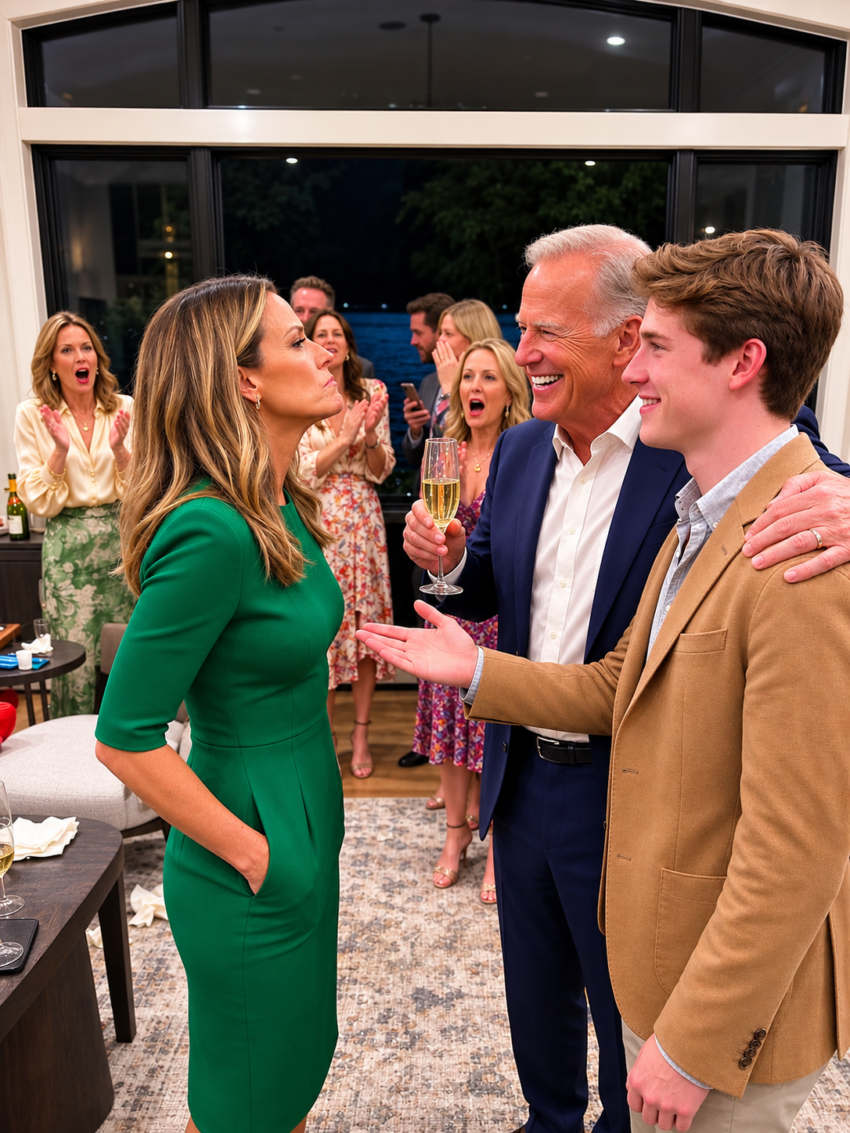
At approximately 8:20, Dad tapped his champagne glass with his car key.
He pulled Brandon close and announced to the room:
“So tonight, my daughter has decided to give this house to her little brother.”
All 88 guests applauded.
Mom was among the first to clap.
Including my family, there were 92 people in the room, and only one person actually owned the house.
Brandon smiled, thanked me, and extended his hand as though the transaction had already been completed.
The applause slowly faded as people began studying my expression.
I kept the keys in my pocket.
“Dismissed,” I said.
Mom immediately objected. Dad insisted that we’d discussed the arrangement, but I denied ever agreeing to it.
He lifted his glass again, preparing to address my guests.
“Now tell them about the letter from the bank, Dad.”
His arm stopped, the champagne glass suspended in the air.
The October 3 Email
Dad set his glass on the mantel without looking for a coaster.
“That is private,” he said.
He had just publicly announced that I was giving away my bedroom, my property, and my lake house, but apparently privacy suddenly mattered when the conversation turned to his finances.
I took out my phone.
“On October third, you sent me an email asking me to co-sign a small refinance.”
“Heather.”
“The attachment included a default notice.”
Brandon lowered his hand. It hung beside him, fingers curled, as though he hadn’t figured out what to do next.
I opened the email. Dad’s message was short, and the attachment contained the details he hadn’t wanted anyone to see.
He had signed the email, Love, Dad.
I wished that part didn’t hurt.
“The brewery loan was three hundred forty thousand dollars,” I said. “You co-signed it. You pledged your house in Waukee.”
Mom moved toward him.
“Gary, she doesn’t need to read that.”
“Three hundred thirty-eight thousand five hundred dollars due December fifteenth.”
Dad reached for my phone, but I moved it behind my hip.
“I told you no on October fourth.”
“To co-signing,” he replied. “You said no to co-signing. There are other ways a family can solve a problem.”
“By announcing that I’ve given Brandon my house?”
“Don’t make it sound ugly.”
My former platoon sergeant put his glass down and remained beside his wife. I appreciated that he didn’t rush into the confrontation. He had taught me enough to know that sometimes the best way to support someone was simply to let them stand.
Dad turned toward the guests.
“There has been a difficult stretch at the brewery. Anyone who has run a business understands that. My son has worked very hard, and we’re trying to preserve what he’s built.”
Brandon nodded, looking relieved to have a familiar speech to hide behind.
I held my phone where Dad could see it.
“What were you going to do with this house?”
“You wouldn’t need to concern yourself with that.”
“Brandon?”
My brother looked at Dad before looking at me.
“We wouldn’t just dump it. Lake property holds its value. We’d get a good price.”
Someone behind me set down a glass with enough force to make me flinch.
The truth was finally out.
They wanted me to hand my brother a $4.6 million property so he could sell it and pay the debt threatening my father’s home.
The room went quiet.
“So you weren’t going to live here,” I said.
Brandon rubbed the back of his neck.
“Not permanently. Heather, be practical. You don’t even need all this space.”
He had managed to promise to take care of my house without intending to unpack a single box.
Dad stepped between us.
“Your mother and I could lose our home. You’re standing here with more than you could ever use, and you’re quibbling about the method.”
I could have asked why they needed a $4.6 million house to deal with a $338,500 debt.
Instead, I asked exactly that.
Dad’s expression tightened.
“There would be taxes. Expenses. Your brother would need something left to start over.”
“Start what?”
“His life, Heather.”
Brandon was thirty-one. Five years younger than me, and apparently still waiting for someone to build his future for him.
Mom touched my elbow.
“We didn’t want to worry you.”
“You invited yourselves here to take my house.”
“We wanted you to help.”
“Then why did you clap before he finished?”
Her hand fell away.
Dad glanced around the room, searching for someone willing to turn the confrontation into an awkward family joke. Two investors who had backed Tallgrass stood together near the windows. Neither smiled.
He tried to appeal to them anyway.
“You understand leverage. She has tied up a great deal of money in a property she barely occupies.”
One of them shook her head.
“Gary, she invited us to celebrate her home.”
He looked back at me.
“Fine. We can discuss a smaller amount. There’s no reason to keep doing this in front of everybody.”
I nearly agreed.
That was the embarrassing part. My feet wanted to follow him into the hallway, where he could explain my selfishness until I apologized for making him uncomfortable.
My friend stood beneath the two paintings she had made. One of our first eleven employees held an empty glass with both hands. These were people I had invited to celebrate something I had earned.
I put my phone away.
“No private discussion tonight.”
Dad raised his eyebrows.
“You’d humiliate your own father?”
“You announced it here. Correct it here.”
He picked up his glass, then set it down again.
For the first time that evening, he had nothing useful to do with his hands.
The Glass on the Mantel
Dad looked at Brandon.
“Tell your sister we were trying to do something good.”
Brandon shifted his weight.
“I thought she’d be happy to help once she understood.”
“You thanked me before I understood,” I said.
He glanced at my pocket.
“Can you stop holding the keys like we’re burglars?”
I took my hand out. The keys remained where they belonged.
Dad seized on the movement.
“There. Let’s all calm down. This has got out of hand.”
He faced the room, shoulders back, preparing to smooth over the situation.
“I may have gotten ahead of myself.”
“No,” I said.
His face turned toward me.
“Excuse me?”
“You said I had decided. Tell them I hadn’t.”
“Heather, everyone understands.”
“Then say it.”
A chair creaked. Nobody left.
I hated that my guests had to stand through this. I hated the champagne in Dad’s glass, the music that had been turned off, and the little red mark on my finger.
But I couldn’t let everyone leave believing his announcement was true.
Dad pressed his lips together.
“My daughter had not formally agreed.”
“Not formally?” Brandon repeated.
Dad gave him a sharp look.
My brother’s mouth remained open for a moment before he turned toward Dad.
“You told me she was on board.”
“You knew she had declined the refinance.”
“You said that was different. You said she would never embarrass you in front of all these people.”
Mom made a small sound.
Dad’s face reddened.
“That’s enough, Brandon.”
“No, you said to thank her and put out my hand.”
Brandon raised that hand as if he were presenting evidence that he had simply followed instructions.
I almost laughed. Thirty-one years old, and he was explaining that Dad had told him where to put his arm.
“You could have asked me,” I said.
“Would you have said yes?”
“No.”
“Well, there you go.”
He said it with genuine irritation, as though my refusal explained why they had needed to skip my permission entirely.
Dad moved closer.
“Your brother has made mistakes. So have you. I remember plenty. We didn’t abandon you over them.”
“You didn’t buy me a house after the ditch in Kansas, either.”
A laugh came from my sergeant. His wife pressed her lips together. Dad looked offended that other people had memories of their own.
“This isn’t funny.”
“No,” I said. “Correct your announcement.”
He looked toward Mom.
“Debbie.”
She clasped her hands against her stomach.
“Just tell them, Gary.”
He stared at her.
“We can go home,” she said.
“You wanted this handled too.”
“I wanted the loan handled.”
“And what did you think that meant?”
She began to cry. I kept my hands at my sides.
I wanted to put my arms around her. I also wanted to ask whether she had practiced clapping in the car. Neither seemed likely to improve the evening.
Dad turned back to the guests.
“Heather did not agree to give Brandon the house,” he said.
He swallowed.
“I made the announcement without her permission.”
The room heard every word.
“And the house?” I asked.
He looked at me with an expression I had last seen when I was eighteen, standing beside his chair with tuition figures written on a legal pad.
It still hurt. I wished it didn’t. Money doesn’t purchase a better father, and apparently, the lake-house package didn’t include one.
“The house is hers,” he said.
Brandon pushed both hands into his pockets.
“Happy now?”
“You’re leaving.”
Dad took a step toward me.
“Don’t order us out like strangers. We have a real problem. December fifteenth isn’t going to move because you’ve made your point.”
“Neither is my answer.”
“Then lend us the amount. Put it in writing. Charge interest, if that makes you feel better. You can afford it.”
I shook my head.
“You would let us lose our house?”
“I won’t give you mine.”
He looked around the room again, but nobody volunteered my money.
There would be no transfer, no keys, and no sale proceeds for the brewery. Dad still owed the bank exactly what he had owed when he walked in, and now his audience knew why he had come.
Brandon started toward the entry, then stopped beside me.
“You always had to be better than me.”
I wanted to tell him about eighteen months on that footlocker, about checking payroll before paying myself, and about the first eleven people he had walked past without learning a single name.
Instead, I opened the front door.
Mom went through first. Brandon followed, keeping his shoulder away from mine.
Dad paused at the threshold.
“After everything I’ve done for this family.”
I looked at the car key in his hand.
“Take your own keys.”
The Dock Steps
I shut the door and stood with my forehead almost touching it.
Behind me, nobody spoke.
I checked the lock. Once was enough, although my hand wanted to do it twice. Then I turned around.
My friend left her place beneath the paintings and came to me.
“Do you want everybody to go?”
“No.”
The word came out too quickly. My face crumpled on the next breath.
“I don’t want them to have ruined all of it.”
She put her arms around me. I cried against her shoulder with 88 guests somewhere behind her, which would once have ranked among my worst ideas for a Saturday.
She rubbed my back.
“They haven’t.”
“I bought waterproof mascara,” I said.
“Was it expensive?”
“Yes.”
“Ask for your money back.”
I laughed into her sleeve. It was a terrible sound, but it got air into my chest.
My sergeant’s wife brought me a tissue. Her husband stood a few steps back, waiting until I lifted my head.
“Captain,” he said, “permission to turn the music back on?”
I nodded.
“Not that song,” his wife said.
“It was a good song.”
“It was good in 1978.”
The room began moving again. A chair scraped. Someone collected the glass Dad had left on the mantel. My friend kept one hand on my arm while I wiped my face.
One of the first eleven employees came over.
“I’m sorry I clapped.”
“You thought I’d given him a present.”
“I should have looked at you.”
“You did.”
He stared at the tissue in my hand.
“I remember you asking if we could wait until Friday to cash those checks.”
I nodded.
“You stayed until we all got paid.”
“So did you.”
He gave me a hug, awkward at first, then hard enough to make my ribs complain. Another of those first employees came up beside him. They didn’t ask me to explain my family. That was a gift I could actually use.
A little later, I found myself beside the paintings with the friend who had made them.
Mom had praised them to three different people without asking a single question. I’d been too busy keeping track of Dad to give my friend the introduction she deserved.
I touched the edge of the nearest frame.
“Would you tell everybody about these?”
She looked at my face.
“Right now?”
“Please.”
She turned toward the guests closest to us and began talking about the shoreline she had painted. Others drifted over. Soon, she was pointing at a patch of color and explaining how she had scraped it off twice because it looked like a parking lot.
I stood beside her.
There was my housewarming, still available if I wanted it.
Nobody tapped a glass. People asked her questions. She answered with her hands, almost knocking a man’s drink over, and he stepped back laughing.
My phone vibrated in my pocket.
Dad’s name lit the screen.
I declined the call and silenced the phone. Then I went back to listening.
The party didn’t become perfect. A few conversations started too carefully. I caught myself checking the front window whenever someone moved near it.
But the trucking company owner told me his newest dispatcher hated every software update until the day after it arrived. My investors argued about whose first meeting with me had been worse. My sergeant offered another version of the Kansas ditch, with its depth increasing every time he opened his mouth.
I let him have another foot.
At eleven, after the last guests had left, my friend stayed to help me gather the abandoned glasses.
“You can leave those,” I said.
“So can you.”
We both stood there holding one.
Then we put them down.
I took my shoes off by the door to the deck. The floor felt cool under my feet. My friend pulled on her coat while I found mine, and we went outside.
At the top of the dock steps, I stopped.
“You don’t have to stay because you think I’ll fall apart.”
“I know.”
“I might, though.”
“I’ve got another sleeve.”
We walked down together.
The boathouse fob was still in my pocket with the keys. I took it out to unlock the boathouse and get the cushions I had put inside before the party.
My finger had a faint square on it.
I pressed the button, opened the door, and handed her a cushion.
We sat at the end of the dock. She tucked her feet beneath her while I let mine hang above the water.
For a while, we listened to the lake against the posts.
Then she leaned her shoulder against mine.
“Good place you’ve got, Heather.”
I laid the keys beside my leg and made room for her on the cushion.
For the first time that evening, the house felt like mine again.
Not because I had defended its value, because I had refused to give it away, or because my father had finally corrected his announcement.
It felt like mine because I was no longer waiting for anyone in my family to tell me that I deserved to keep what I had worked for.
The lake was quiet.
The keys were beside me.
And I had finally stopped negotiating with people who believed my success belonged to them.