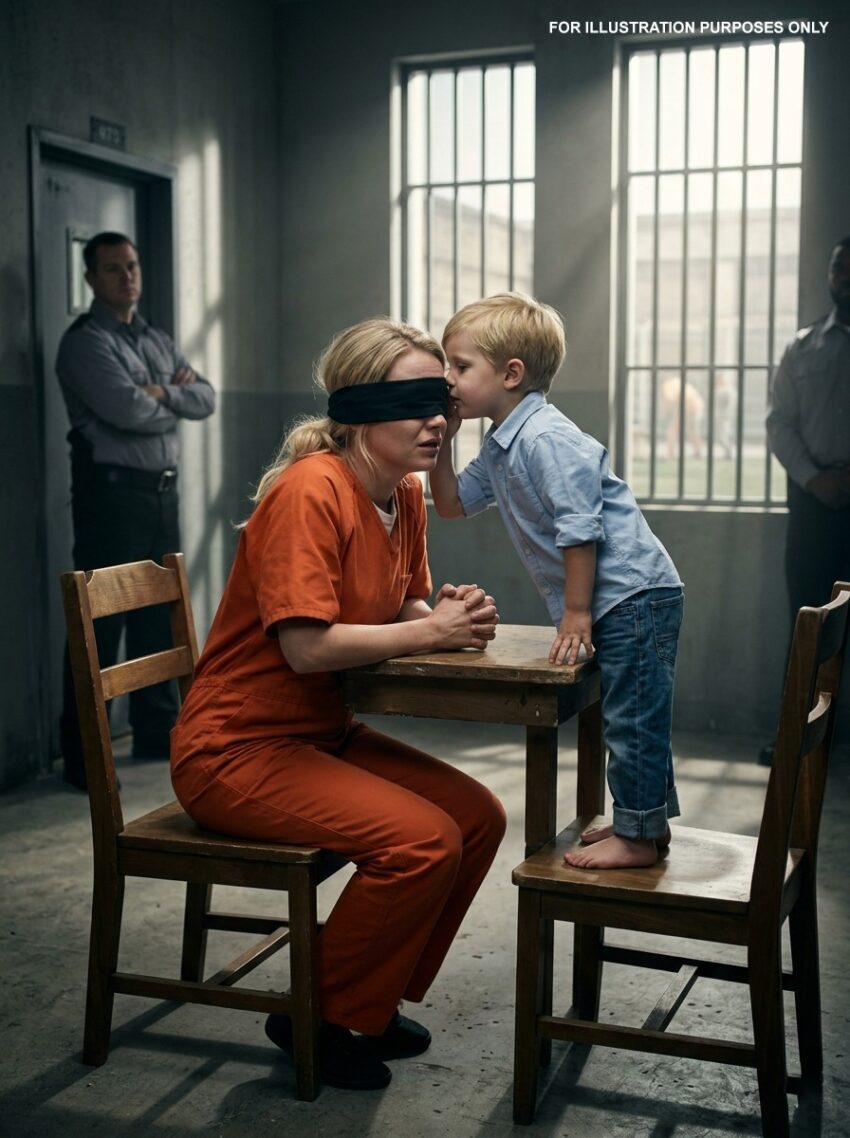
For six years, Sofía lived with the belief that her mother had k!lled her father.
Not because she wanted to believe it.
Because every adult around her insisted it was true.
The police believed it.
The courts believed it.
The newspapers certainly believed it.
And after hearing the same story repeated enough times, even grief itself started sounding like evidence.
By the time Sofía turned seventeen, she no longer knew whether the silence inside her chest came from heartbreak, guilt, or exhaustion.
All she knew was that her mother was dying in prison—and she had never once found the courage to ask what really happened that night.
The tragedy shattered their family almost instantly.
One evening, Sofía’s father was alive—laughing in the kitchen while cooking late-night eggs and teasing Mateo for refusing vegetables.
By morning, he was dead.
And their mother sat handcuffed inside the back of a police car while neighbors watched through windows pretending not to stare.
Sofía still remembered the expression on her mother’s face that night most clearly.
Not rage.
Not panic.
Confusion.
Real confusion.

“I didn’t do this,” she kept repeating while officers led her away.
At eleven years old, Sofía wanted desperately to believe her.
But then came the evidence.
The fingerprints.
The argument neighbors overheard earlier that evening.
The blood on her mother’s sleeve.
The missing financial documents.
Every detail seemed to point in one direction.
And slowly, certainty replaced love.
That was when Uncle Rubén stepped in.
At first, he looked like salvation.
He paid legal fees.
Handled funeral arrangements.
Moved into the family home “temporarily” to help raise the children.
Everyone praised him endlessly.
“What a generous man.”
“Those poor children are lucky to have him.”
“Your father would’ve wanted this.”
Rubén accepted every compliment humbly.
Too humbly.
Over time, he quietly took control of everything.
The business.
The house.
The finances.
Even the way Sofía and Mateo remembered their mother.
Whenever prison letters arrived, Rubén sighed heavily before handing them over.
“She’s trying to manipulate you again,” he would mutter softly.
Sometimes Sofía read the letters anyway.
Sometimes she couldn’t bear to.
Because every page sounded the same.
I’m innocent.
Please believe me.
I love you both more than life.
At first Sofía cried reading them.
Then eventually she stopped replying altogether.
Silence became easier.

Mateo reacted differently.
He barely spoke at all after their father died.
Teachers called him withdrawn.
Doctors blamed trauma.
Rubén called him “sensitive.”
But every now and then, Sofía noticed something strange.
Whenever their uncle entered a room unexpectedly, Mateo flinched.
Not dramatically.
Just enough to make her uneasy.
Years passed that way.
Their mother remained imprisoned while appeals failed one after another. Rubén expanded the family business steadily, presenting himself publicly as the grieving brother holding everything together after unimaginable tragedy.
And eventually, even Sofía started repeating his version of events automatically.
Not because she fully believed it.
Because doubting it hurt too much.
Then came the call.
The final appeal had been denied.
The sentence would be carried out within days.
Sofía felt physically numb afterward.
Not devastated.
Not even shocked anymore.
Just hollow.
Rubén drove them to the prison himself for the final visit.
Rain streaked softly against the car windows while Mateo sat unusually tense beside her in the backseat, twisting his fingers together so tightly his knuckles turned white.
“You alright?” Sofía whispered quietly.
He nodded too fast.
A lie.
But before she could ask more, Rubén interrupted smoothly from the front seat.
“Your mother needs peace today,” he said gently. “No emotional scenes.”
Something about the way he said it made Mateo shrink deeper into silence.
The visitation room felt colder than Sofía expected.
Her mother looked older.
Much older.
Six years had hollowed her face and threaded gray through her dark hair, but the second she saw her children, warmth flooded instantly into her expression.
“My babies,” she whispered.
Sofía nearly broke hearing that.
Because despite everything—
part of her still wanted to run into her mother’s arms like she did before the world fell apart.
Their conversation started awkwardly.
Small questions.
School updates.
Long silences nobody knew how to fill.
Then finally, their mother looked directly at Sofía.
“You still don’t believe me.”
Not accusing.
Just sad.
Sofía opened her mouth.
Nothing came out.
Because the truth was more complicated than disbelief.
She wanted to believe her.
She just didn’t know how anymore.
Then suddenly Mateo stood up so fast his chair scraped violently across the floor.
Everyone turned toward him in shock.
His breathing sounded uneven now.
Terrified.
But determined.
And for the first time in years he spoke loudly.
“It wasn’t Mom.”
The room froze.
Rubén, standing near the doorway with folded arms, went completely still.
Mateo pointed directly toward him with shaking hands.
“It was him.”
Silence crashed down so heavily Sofía could hear her own heartbeat.
Their mother stared at Mateo in complete shock.
“What are you saying?”
Tears streamed down Mateo’s face immediately.
“That night,” he whispered brokenly, “I woke up because Dad was yelling.”
Rubén stepped forward instantly.
“Mateo,” he snapped sharply, “stop talking.”
The boy flinched violently.
And suddenly
Sofía understood everything.
Not intellectually.
Instinctively.
The fear.
The silence.
The shrinking every time Rubén entered rooms.
Mateo wasn’t traumatized only by their father’s death.
He was terrified of the man standing beside them.
“I saw him,” Mateo cried. “I saw Uncle Rubén in the kitchen after Dad fell.”
Rubén’s face darkened instantly.
“He’s confused.”

“No!” Mateo shouted suddenly. “You told me bad things would happen if I talked!”
Guards moved immediately toward the room.
Their mother stood frozen with tears pouring silently down her face now.
“What did you see, sweetheart?” she whispered.
Mateo looked like a child drowning while finally forcing himself to breathe.
“He put the papers near Mom’s coat,” he sobbed. “And there was blood on his hands.”
Everything exploded after that.
Guards separated Rubén instantly while prison officials halted the execution order moments before it was scheduled to move forward.
Sofía sat shaking beside her mother while investigators flooded the prison.
And for the first time in six years people finally started asking different questions.
The case reopened immediately.
Police returned to the family home with new warrants. Hidden inside an old office safe beneath false floorboards, they discovered what Rubén thought he destroyed years earlier:
Financial records.
Threatening letters.
Photographs.
Audio recordings.
Evidence their father secretly collected before his death.
And buried inside it all proof that Rubén had been stealing from the family business for years.
Their father found out.
And planned exposing him.
The recordings shattered the old case entirely.
Especially one final tape recovered from a hidden lockbox.
Their father’s voice filled the room clearly:
“If anything happens to me, Rubén is responsible.”
Sofía physically stopped breathing hearing it.
Because suddenly every memory rearranged itself differently.
Every manipulation.
Every carefully planted doubt.
Every moment Rubén encouraged distance between them and their mother.
None of it was protection.
It was strategy.
Under pressure, Rubén’s entire story collapsed frighteningly fast.
Once investigators realized the original evidence had been staged, everything unraveled.
Witnesses changed statements.
Financial trails resurfaced.
Old inconsistencies finally mattered.
And eventually, Rubén confessed.
Not fully.
Not nobly.
But enough.
Enough to destroy the lies he built their lives upon.
The conviction against Sofía’s mother was overturned less than three months later.
The morning she walked free, she stood outside the prison gates blinking slowly in the sunlight like someone relearning how to exist in open air.
For a long moment, she didn’t move at all.
Then Sofía whispered shakily:
“Mom?”
That single word shattered whatever strength remained.
Her mother collapsed into tears immediately.
And this time, Sofía ran into her arms without hesitation.
“I’m sorry,” Sofía sobbed. “I’m so sorry I didn’t believe you.”
Her mother held her face gently despite trembling hands.
“You were a child,” she whispered softly. “You were surviving.”
Behind them, Mateo cried quietly too.
But beneath the grief, something else finally appeared in his expression for the first time in years.
Relief.
Healing didn’t happen quickly afterward.
People imagine truth fixes everything immediately.
It doesn’t.
Truth simply gives broken people permission to finally begin healing honestly.
The family moved into a smaller home far away from old memories and newspaper headlines. Some nights Sofía still woke panicking from dreams about prison visitation rooms and courtroom verdicts.
And Mateo took even longer to recover from the years he spent carrying fear silently inside himself.
But slowly life returned.
One afternoon months later, they visited the old house together for the final time before selling it.
The kitchen still carried echoes of terrible memories.
Sofía stood there quietly until Mateo suddenly pointed toward the window.
“We should put something there,” he said softly.
“What?”
“A plant.”
Their mother smiled faintly through tears.
“To grow something new?”
Mateo nodded.
So together, they planted a bougainvillea where sunlight spilled brightest across the kitchen floor.
Not because flowers erase grief.
But because healing sometimes begins with choosing what grows next inside places once filled with pain.
Eventually, the business was sold.
And with part of the settlement money, Sofía’s mother opened a small restaurant downtown.
She named it La Segunda Vida.
The Second Life.
Most customers never understood the meaning.
But for their family, it meant everything.
Because sometimes truth does not arrive dramatically.
Sometimes it comes trembling from the mouth of a frightened child who finally decides silence is more terrifying than speaking.
And sometimes that voice is enough to save a life.