I used to think the hardest part of being a single mother was learning how to say “we can’t afford it” without letting my daughter hear the shame hiding behind the words. Then one small act of kindness at her school turned into a phone call so terrifying it made my hands shake on the steering wheel all the way across town.
Most weeks in our life felt like survival with a smile forced over it.
I worked two jobs.
I stretched every dollar until there was nothing left to stretch.
I knew exactly how much gas we needed to make it to Friday, which bill could wait three days, and which overdue notice might finally push us over the edge.
But through all of it, my daughter Mia somehow stayed bright. Nine years old and loud in the sweetest way possible. Every afternoon she burst through the apartment door talking before her backpack even touched the floor — playground drama, stories about classmates, questions about dinner before lunch had even fully worn off.
That was how I knew immediately something was wrong the day she came home quiet.
No cartoons.
No chatter.
No snack request.
She just sat at the kitchen table staring at nothing while her grilled cheese went cold in front of her.
Finally, I sat across from her and asked softly, “What happened at school?”
Her mouth trembled instantly.
“It’s Chloe,” she whispered.
Then the story came pouring out.
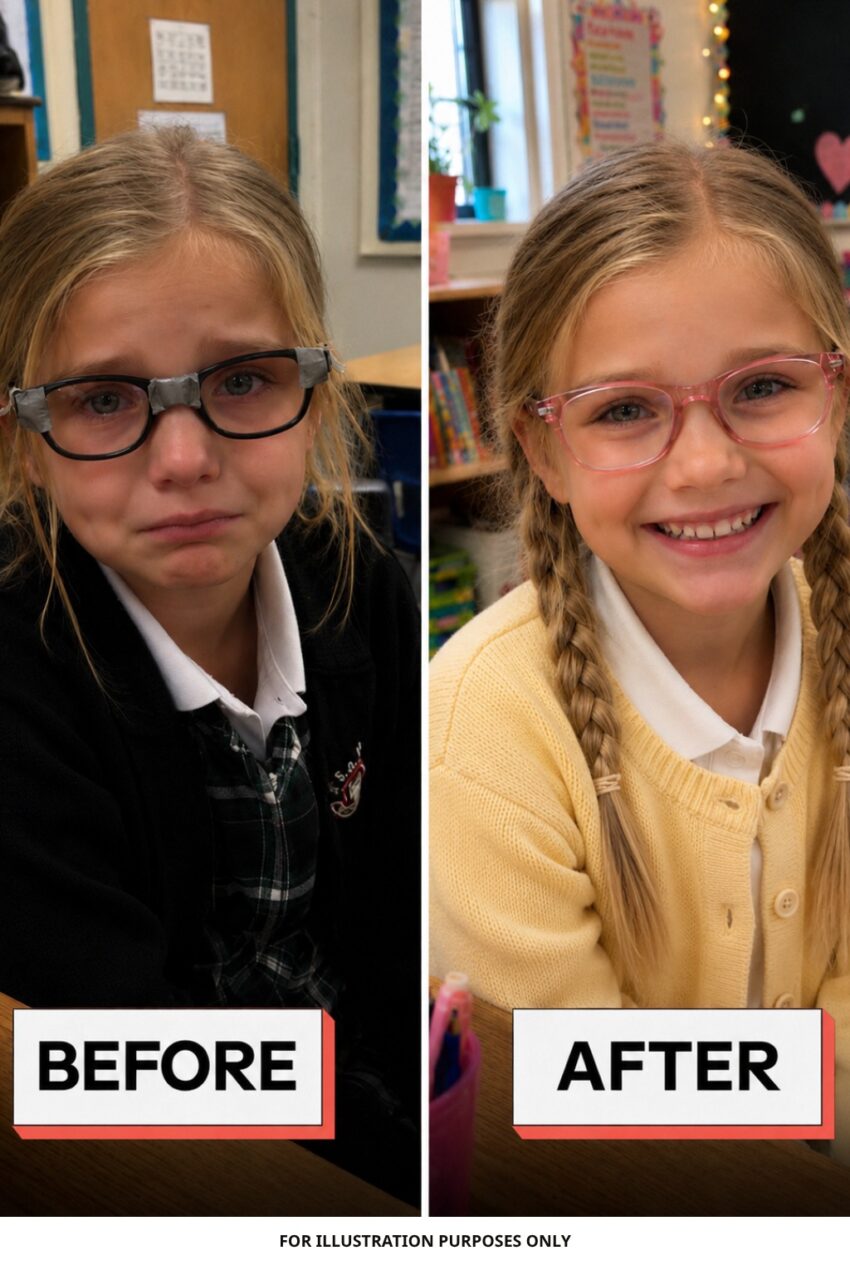
During volleyball, Chloe’s glasses had snapped. The lenses survived, but the frames were now held together with thick strips of silver duct tape. The kids at school had turned cruel almost immediately. They laughed at her every time she walked past, called her names, and mocked the taped frames until Chloe became so embarrassed she started hiding in the bathroom during recess just to cry alone where nobody could see her.
Then Mia quietly added the part that broke my heart completely:
“She said her parents can’t afford new ones.”
That sentence hit me harder than Mia realized.
Because I knew exactly what that kind of shame sounded like.
I knew what it felt like to shrink your problems smaller so nobody would see how scared you really were.
Then Mia looked up at me with hopeful eyes and asked:
“Can we help her?”
God, I wanted to say yes.
I wanted to be the kind of mother who solved problems first and figured out consequences later.
But the power bill was due. We had maybe three days of groceries left. My checking account looked less like financial stability and more like a warning sign.
So instead, I told her the truth.
“I’m sorry, baby… but we can’t afford glasses for someone else right now.”
She didn’t argue.
Didn’t cry.
She just nodded quietly and disappeared into her room.
Somehow, that made it hurt even more.
The next afternoon, I came home from work and immediately noticed something missing.
Her Lego bin.
Gone.
Not moved.
Gone completely.
That collection was her favorite thing in the world. Four years of birthday gifts, Christmas sets, garage-sale treasures, and tiny rewards after difficult weeks. She organized every piece by color and built entire cities across our living room floor.
Before panic could fully settle in, Mia came running toward me smiling for the first time in days.
“I fixed it, Mom.”
My stomach dropped.
“What do you mean?”
She handed me a receipt from the optical shop near the bus stop.
“I sold my Legos,” she said simply. “Now Chloe has new glasses.”
I just stared at her.
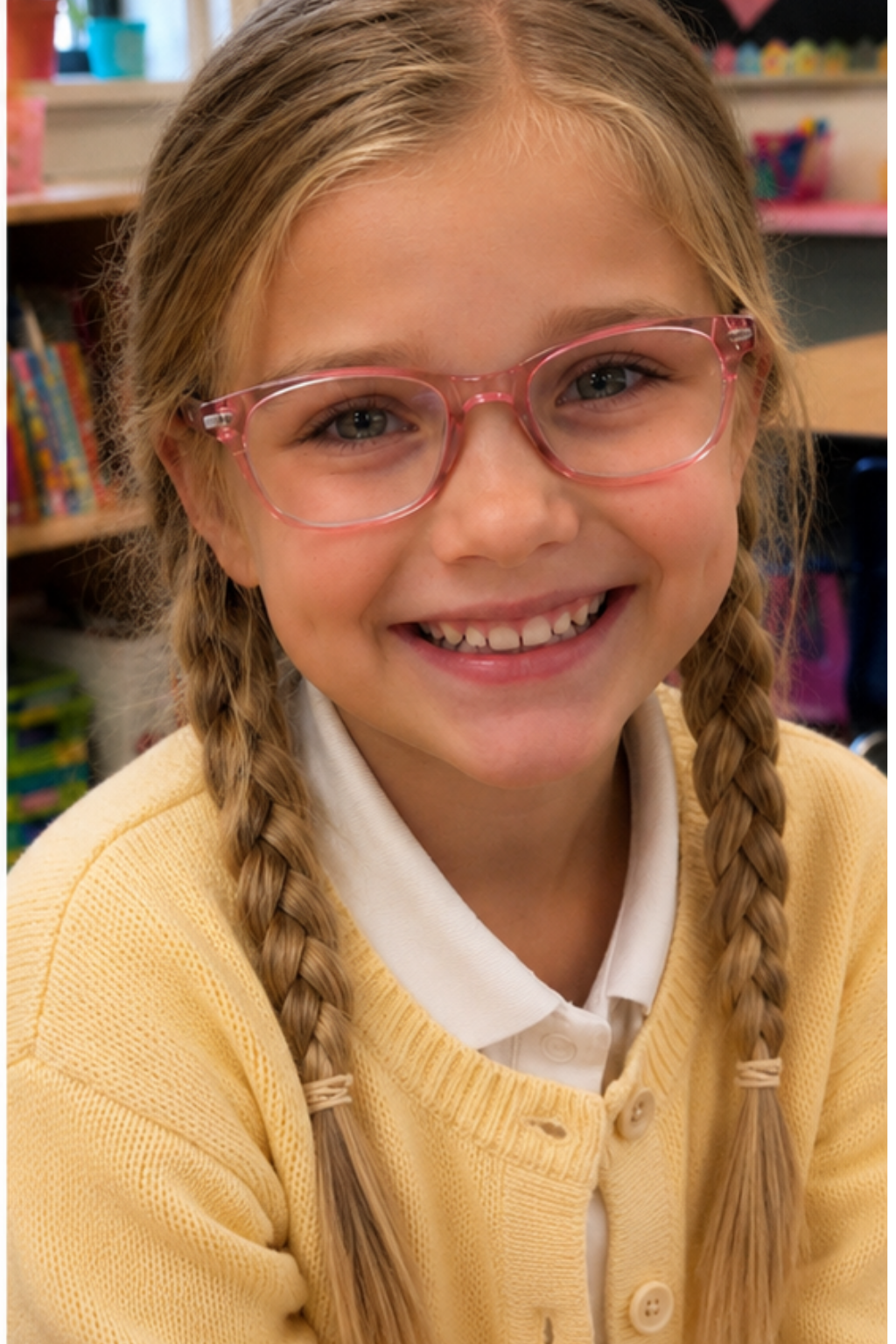
Our downstairs neighbor Mrs. Tanya had walked with her to the store after her grandson bought the entire collection for $112. Mia explained everything to the woman working at the optical shop. Since Chloe’s family already had records there, the employee allowed Mia to pay for replacement frames and add store credit to the account until Chloe’s mother picked them up later.
“You did all that by yourself?” I asked weakly.
Mia nodded like it was obvious.
Then she looked at me with complete sincerity and said the sentence I will probably remember for the rest of my life:
“Because Chloe was crying in the bathroom, Mom.”
I pulled her into my arms so quickly she squeaked.
And honestly, in that moment, despite all the exhaustion and fear and constant struggling, I felt something close to pride so overwhelming it almost hurt.
Because somehow my little girl had grown into the kind of person who gave away the thing she loved most just to stop someone else from suffering.
I truly believed that was the end of the story.
I was wrong.
The next morning, less than an hour after dropping Mia off at school, my phone rang.
It was her teacher, Ms. Kelly.
And she sounded like she had been crying.
“Please come to the school immediately,” she whispered. “Chloe’s parents are here… and they say you and Mia are going to answer for what happened.”
My blood turned cold instantly.
The drive there felt endless. Every horrible possibility tore through my mind at once. Had someone accused Mia of stealing? Had Chloe gotten hurt? Was there some misunderstanding with the glasses?
By the time I reached the office, my heart was pounding so hard it made me feel sick.
Then I walked inside and froze.
Mia stood near the principal’s desk with her head lowered.
Chloe sat crying in a chair nearby.
Ms. Kelly looked pale.
And Chloe’s father was staring at my daughter with such a hard expression that every protective instinct inside me exploded at once.
I crossed the room immediately and pulled Mia behind me.
“What is going on?” I demanded.
Then Chloe’s father said stiffly:
“Your daughter paid for new glasses for mine.”
The room fell silent.
I swallowed hard. “Yes. Because she thought Chloe needed help.”
His jaw tightened.
“That,” he said, “is exactly the problem.”
I felt Mia flinch behind me.
“Then speak to me,” I snapped. “Not to her.”
For a moment, nobody moved.
Then Chloe’s mother finally burst into tears.
And suddenly everything changed.
They weren’t angry because Mia helped Chloe.
They were ashamed because they hadn’t realized how badly their daughter was suffering.
Chloe admitted the truth through tears. Her parents actually could afford new frames, but after she repeatedly broke or lost glasses over the past year, they decided to make her wait a few days before replacing them as a lesson about responsibility. The taped frames were temporary, safe enough to use for a short time.
What they didn’t know was that the bullying had become unbearable.
And Chloe had lied to Mia because she was too embarrassed to admit she was being punished again.
Then Chloe’s father turned toward Mia.
“Is it true you sold your entire Lego collection?”
Mia nodded.
“All of it?”
“Yes.”
“Why?”
Mia blinked at him like the question itself was confusing.
“Because she needed help.”
That was it.
That simple.
That honest.
And somehow, that single sentence shattered every adult in the room.
The anger disappeared from Chloe’s father’s face completely. What remained looked painfully close to guilt.
Even Ms. Kelly turned away to wipe tears from her eyes.
Then Chloe walked over to Mia and apologized for lying.
And without hesitation, Mia hugged her immediately. No speech. No hesitation. Just forgiveness.
Three days later, Chloe’s parents invited us to their house.
I almost refused. I’m not comfortable in homes where the kitchen floor probably costs more than my yearly rent. But Mia wanted to see Chloe, so we went.
While the girls disappeared upstairs with juice boxes and art supplies, Chloe’s father slid a folder across the table toward me.
Inside was paperwork for a college fund opened in Mia’s name.
I stared at them speechless.
“You don’t have to do this,” I whispered.
Chloe’s mother smiled through tears.
“We know,” she said softly. “But your daughter reminded us that kindness doesn’t wait for perfect conditions. It simply acts. That’s worth investing in.”
That night, after we got home, I tucked Mia into bed and asked quietly:
“Do you miss your Legos?”
“A little,” she admitted sleepily.
“Was it worth it?”
She smiled into her pillow and whispered:
“Chloe smiles more now.”
That was her answer.
After she fell asleep, I sat alone on the edge of her bed staring at the empty corner where that giant Lego bin used to be.
For years, I spent so much time worrying about all the things I couldn’t give my daughter — more money, easier days, less stress, fewer sacrifices.
But somehow, despite growing up with so little, she had learned something many wealthy adults never truly understand:
The most valuable thing a person can give away is not money.
It’s compassion