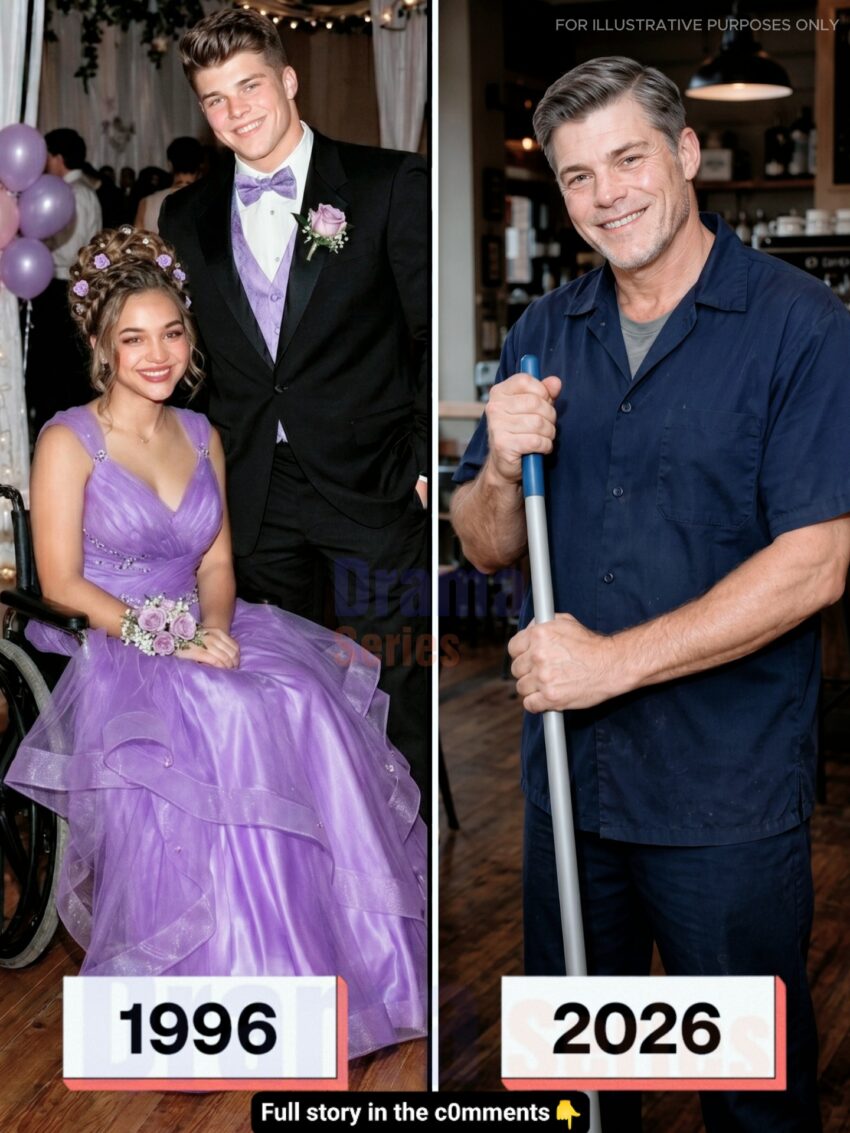
Six months after a devastating car accident left me in a wheelchair, I attended my high school prom expecting exactly three things: pity, awkward smiles, and a long evening spent sitting alone against a wall.
What I didn’t expect was Marcus.
And I certainly never imagined that one simple act of kindness would stay with me for the next thirty years.
The Night That Changed Everything
Back then, I was seventeen years old. Like most teenagers, my biggest worries had been grades, curfews, and whether my prom dress looked good enough.
Then one drunk driver ran a red light and shattered the future I thought I knew.
I woke up in a hospital bed surrounded by doctors discussing my injuries as though I wasn’t even there. My legs had been broken in multiple places. My spine had been damaged. Every conversation revolved around rehabilitation, recovery, and uncertainty.
There were no guarantees.
Only possibilities.
The hardest part wasn’t the pain.
It was becoming someone people looked at differently.
By the time prom arrived, I had already decided I wasn’t going.
When my mother stood in my bedroom doorway holding my dress, I shook my head.
“I don’t want to go.”
“You deserve one night,” she said gently.
“I deserve not to be stared at.”
“Then stare back.”
“I can’t dance.”
She walked over and sat beside me.
“You can still exist in a room, Emily.”
Those words hurt because they were true.
Since the accident, I had become an expert at disappearing while remaining physically present.
After a long silence, I agreed to go.

Standing Out by Sitting Still
The gymnasium was packed with music, laughter, and teenagers celebrating their future.
I spent the first hour parked near the wall, pretending I was perfectly comfortable.
People stopped by.
“You look beautiful.”
“I’m glad you came.”
“We should get a picture together.”
Their intentions were kind, but every conversation ended the same way.
They returned to the dance floor.
Returned to movement.
Returned to normal.
I remained behind.
Then Marcus appeared.
He stopped in front of me and smiled.
“Hey.”
I actually glanced over my shoulder because I assumed he must be talking to someone else.
He laughed softly.
“No, definitely you.”
“That’s brave,” I replied.
He tilted his head.
“You hiding over here?”
I smiled faintly.
“Is it hiding if everyone can see me?”
For a moment, his expression softened.
“Fair point.”
Then he extended his hand.
“Would you like to dance?”
I stared at him.
“Marcus, I can’t.”
He nodded as though I had simply pointed out an inconvenience.
“Okay,” he said. “Then we’ll figure out what dancing looks like.”
Before I could argue, he gently wheeled me onto the dance floor.
Immediately, panic surged through me.
“Everyone’s staring.”
“They were already staring.”
“That’s not helping.”
“It helps me,” he said. “Now I don’t feel rude.”
I laughed despite myself.
Marcus took my hands and began moving with me rather than around me.
He spun my wheelchair slowly.
Then a little faster.
Soon I found myself laughing harder than I had since before the accident.
For the first time in months, I wasn’t the girl in the wheelchair.
I was simply a girl dancing.
When the song ended, Marcus rolled me back to my table.
I looked at him.
“Why did you do that?”
He shrugged, though he suddenly looked nervous.
“Because nobody else asked.”
Life Takes Us Different Directions
After graduation, my family relocated so I could continue rehabilitation.
Whatever possibility existed between Marcus and me disappeared with the move.
The following years were difficult.
There were surgeries.
Therapy sessions.
Falls.
Setbacks.
Victories so small that nobody else would have noticed them.
I learned how to transfer independently. Later, I learned to walk short distances using braces. Eventually, I learned to walk without them.
But I also discovered something else.
The world was not built for people whose bodies worked differently.
Buildings, sidewalks, entrances, public spaces—everywhere I looked, obstacles existed that most people never noticed.
That realization shaped my future.
I studied architecture and design.
At first, my motivation came from anger.
Over time, it transformed into purpose.
I worked harder than everyone around me. I fought for opportunities. I endured assumptions about my abilities and determination.
Eventually, I founded my own architecture firm.
Our mission was simple:
Create spaces that welcomed everyone.
By the time I turned fifty, I had achieved more than I ever imagined possible.
A successful company.
Financial security.
Professional respect.
And yet, despite all of it, I never forgot the boy who asked me to dance.

An Unexpected Reunion
Three weeks ago, fate intervened.
I was standing inside a small café near one of our construction sites when the lid popped off my coffee cup.
Scalding coffee splashed across my hand, the counter, and the floor.
I groaned.
“Perfect.”
A man working nearby immediately grabbed a mop.
“Don’t move,” he said. “I’ve got it.”
He cleaned the spill, handed me napkins, and instructed the cashier to replace my drink.
“I can pay for it,” I protested.
He waved me off.
Only then did I really look at him.
The face was older.
The shoulders broader.
There was a noticeable limp.
But the eyes were unmistakable.
Marcus.
He glanced at me and paused.
“You look familiar.”
I smiled.
“Do I?”
He frowned thoughtfully but eventually shook his head.
“Maybe I’m imagining things.”
I left.
Then came back the next day.
When Marcus approached my table, I looked directly at him.
“Thirty years ago, you asked a girl in a wheelchair to dance at prom.”
His hand froze.
Slowly, he looked up.
Recognition spread across his face.
“Emily?”
I laughed.
His eyes widened.
“Oh my God.”
For several minutes, neither of us could stop smiling.
The Weight of Thirty Years
As we talked over the following days, I learned what had happened after high school.
His mother became seriously ill.
His father was absent.
Scholarships disappeared.
Dreams were postponed.
Then forgotten.
Marcus spent decades doing whatever work was available.
Warehouses.
Maintenance.
Delivery jobs.
Medical support positions.
Café shifts.
Anything necessary to keep a roof overhead and care for his mother.
Along the way, he severely injured his knee.
Unable to afford proper treatment, he continued working until the damage became permanent.
“I kept telling myself things would improve soon,” he admitted.
“Then one day I looked up and realized thirty years had passed.”
His words stayed with me.
Because I understood something Marcus didn’t.
The young man who had shown kindness to a frightened girl had spent his entire life giving pieces of himself to everyone else.
And now there was almost nothing left.
Learning to Accept Help
When I first offered assistance, Marcus immediately refused.
“No.”
“It doesn’t have to be charity.”
He laughed.
“That’s exactly what people with money say before offering charity.”
So I changed strategies.
My company was developing an adaptive recreation center and needed consultants who understood injury, athletics, recovery, and resilience.
Marcus understood all of those things better than anyone I knew.
I invited him to attend a planning meeting.
Paid.
No obligations.
No favors.
Real work.
At first, he resisted.
Then his mother intervened.
When I visited their apartment one afternoon, she pulled me aside.
“He’s proud,” she told me. “The dangerous kind of proud.”
“I’ve noticed.”
“If you’re offering him dignity instead of pity, don’t give up.”
So I didn’t.
Marcus attended one meeting.
Then another.
During one discussion, our design team reviewed plans for the new facility.
“What are we missing?” one designer asked.
Marcus studied the drawings.
Finally, he spoke.
“You’re making everything accessible.”
The room nodded.
Then he continued.
“But accessibility isn’t the same thing as welcome.”
Silence.
Nobody had considered that distinction.
He pointed to the entrance design.
“No athlete wants to enter through a side door next to the dumpsters just because that’s where the ramp fits.”
Every designer in the room suddenly understood.
From that day forward, Marcus became an essential part of the project.

A New Beginning
His physical recovery took longer.
I never pressured him.
Instead, I connected him with a specialist.
Eventually, after his knee buckled during a work shift, he agreed to go.
The doctor couldn’t erase decades of damage.
But he could improve it.
For the first time in years, Marcus had options.
After one appointment, we sat quietly outside the clinic.
“I thought this was just my life now,” he said.
I looked at him.
“It was your life.”
I paused.
“It doesn’t have to be the rest of it.”
For a long moment, he didn’t speak.
Then he admitted something that changed everything.
“I don’t know how to let people help me.”
I smiled.
“I know.”
Because once upon a time, neither had I.
The Dance Continues
The months that followed weren’t perfect.
Healing never is.
Marcus struggled with pride.
Physical therapy.
Self-doubt.
Learning to trust people again.
But slowly, things improved.
His consulting role became permanent.
He began mentoring injured teenagers.
He helped train coaches.
He spoke at community events.
Young athletes listened because Marcus never spoke from theory.
He spoke from experience.
One day, a teenager asked him:
“If I can’t play anymore, who am I?”
Marcus smiled.
“Start by figuring out who you are when nobody’s cheering.”
The room fell silent.
Because everyone knew he was speaking from the heart.
The Memory We Both Kept
One evening, while sorting through old photographs, I found our prom picture.
The next day, I left it on my desk.
Marcus noticed it immediately.
“You kept that?”
“Of course.”
He picked up the photo carefully.
Then he surprised me.
“I tried to find you after graduation.”
I stared at him.
“What?”
“You moved away before I could.”
For a moment, neither of us spoke.
Finally, I admitted the truth.
“I always thought you forgot about me.”
Marcus looked genuinely offended.
“Emily,” he said softly, “you were the only girl I wanted to find.”
Thirty years disappeared in that moment.
All the missed opportunities.
All the unanswered questions.
All the unfinished feelings.
Gone.
Full Circle
Today, we’re together.
Not like teenagers.
Not like people chasing fantasies.
Like adults who understand how fragile life can be.
Marcus now leads training programs at the recreation center we built together. His mother receives the care she deserves. He consults on every adaptive design project our company undertakes.
And he’s very good at it.
Because he never sees people as problems to solve.
Only people.
Last month, during the grand opening of our community center, music began playing in the main hall.
Marcus walked over and extended his hand.
The exact same gesture he had made thirty years earlier.
“Would you like to dance?”
I smiled and took his hand.
“We already know how.”
Note: This story is a work of fiction inspired by real events. Names, characters, and details have been altered. Any resemblance is coincidental. The author and publisher disclaim accuracy, liability, and responsibility for interpretations or reliance. All images are for illustration purposes only.