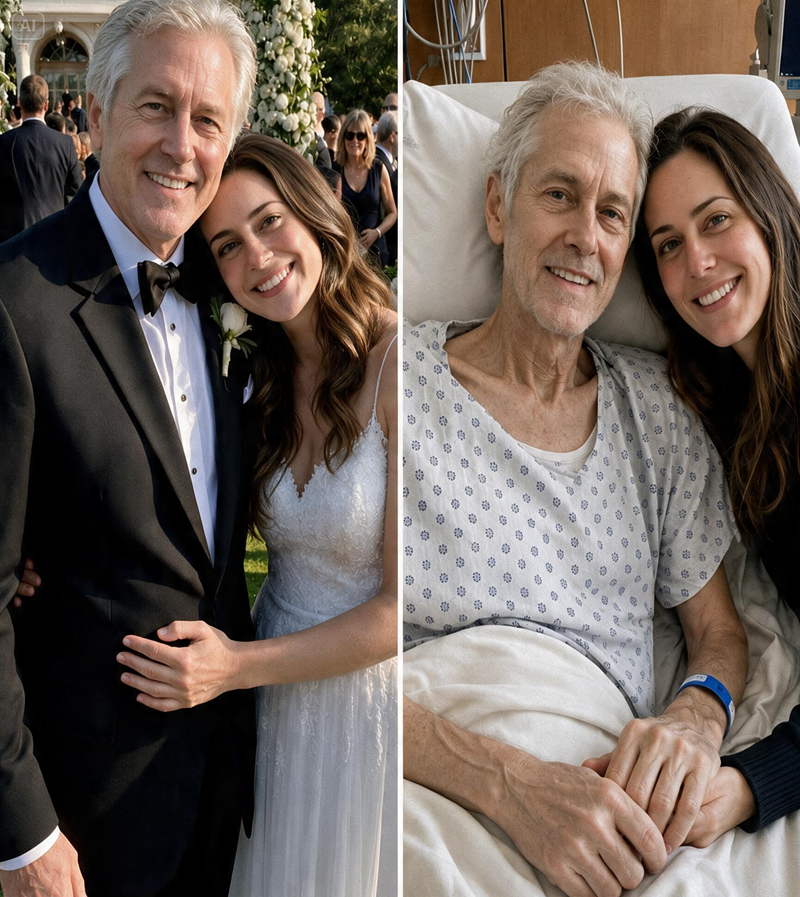
Part 1: The Reason I Said Yes
The morning after my husband’s funeral, I sat across from his three adult children while his lawyer placed a small wooden box in front of me.
There was no check inside.
No key to the mansion.
No diamond necklace or secret bank document.
Only a faded photograph and a letter written in my husband’s familiar hand.
His daughter, Marlene, leaned back in her chair and smiled.
“So that’s it?” she said. “After everything, the waitress gets a souvenir?”
I barely heard her.
My attention was fixed on the first line of the letter.
My dearest Elena, by now they have probably convinced themselves that they know why you married me.
My hands began to tremble.
The truth was, I had once believed I knew the answer too.
I thought I had married Russell Bennett for security.
I had been thirty-two years old, exhausted, frightened, and one missed paycheck away from losing the little apartment I called home.
The place had one bedroom, a heater that worked only when it felt like it, and a window that allowed rainwater to gather along the sill. The pipes complained throughout the night, and the kitchen smelled permanently of instant noodles and burnt coffee.
Every evening after work, I would sit on the edge of my bed and divide my tips into careful piles.
Rent.
Electricity.
Groceries.
Transportation.
The grocery pile was always the smallest.
I worked long shifts as a waitress, smiling at customers while pain climbed from my feet to my lower back. I had become skilled at hiding hunger, fatigue, and fear beneath a cheerful voice.
“Of course.”
“Right away.”
“Is there anything else I can bring you?”
No matter how tired I was, I never wanted anyone to see me struggling.
Then I met Russell.
It happened at a charity dinner held in a ballroom so elegant that even the air seemed expensive. I was working as temporary catering staff, dressed in stiff black trousers and a white shirt that pinched around my shoulders.
I had skipped lunch because the uniform was slightly too small. By the time the first champagne glasses were served, the chandeliers overhead had begun to blur.
Russell stood near the edge of the crowd.
He was sixty-two, with silver hair, calm blue eyes, and the quiet confidence of a man who had never needed to raise his voice to be noticed.
When he took a glass from my tray, he did not immediately turn away.
“What is your name?” he asked.
“Elena.”
“You have been standing for hours, Elena. Are your feet hurting?”
The question startled me so much that the tray nearly slipped from my hand.
Most guests barely noticed the people serving them. Russell noticed the way I shifted my weight to ease the pain.
Before I could answer, he caught the attention of the catering manager and quietly arranged for me to sit behind a large column for a few minutes.
He brought me water himself.
We talked while the ballroom glittered around us.
He told me about his late wife’s garden. I told him about the mystery novel I read during my bus rides. He admitted that he had not eaten a homemade dinner in nearly three years, even though his kitchen was larger than my entire apartment.
He did not flirt with me.
He listened.
The next morning, he called the catering company and asked permission to contact me. Then he called me personally.
After that, he called almost every morning.
Sometimes we spoke for ten minutes. Sometimes an hour.
He asked about my work, my childhood, and the dreams I had quietly stopped believing in. He never laughed when I said that my greatest wish was to wake up without immediately calculating how much money I owed.
Three months later, Russell invited me to dinner at a small Italian restaurant where everyone seemed to know him.
After dessert, he placed a ring box on the table.
I stared at it, unable to breathe.
“I am not asking you to pretend that this is a fairy tale,” he said. “And I am not asking you to feel something you do not feel. I am asking you to let me give you a life where you do not have to be afraid every day.”
He was thirty years older than me.
He was wealthy.
I was tired of counting coins and pretending I was not drowning.
So I said yes.
Some of my friends called me foolish. Others called me lucky. A few were honest enough to say what everyone else was thinking.
They believed I was marrying him for his fortune.
Perhaps, in the beginning, part of me was.
Russell’s children believed it immediately.
His two sons were distant but polite when we met. His daughter, Marlene, made no attempt to hide her contempt.
At our engagement gathering, she looked at my inexpensive dress, then at my hands as though she expected to find evidence of theft.
“So you’re Father’s newest project,” she said.
I forced a smile.
“It’s nice to meet you too.”
She did not smile back.
During the wedding, I tried not to notice the whispers. I focused on Russell’s hand around mine and the gentle certainty in his eyes.
When he brought me to his house after the ceremony, I stopped just inside the doorway.
The floors were made of polished marble. A sweeping staircase curved toward the second floor, and the ceilings rose so high that my footsteps seemed to disappear into them.
Russell squeezed my fingers.
“Welcome home.”
Marlene stood on the landing above us, watching.
Later that evening, after most of the guests had left, I went searching for water. Marlene blocked my way near the staircase.
Her expression was calm, but her voice was sharp.
“You think you’re getting this house, don’t you?”
I said nothing.
She stepped closer.
“You’ll get nothing.”
Russell appeared behind her.
His bow tie had been loosened, and he still held an untouched glass of champagne. He had heard everything.
For one terrible second, I expected him to defend me with anger.
Instead, his voice remained quiet.
“Elena will receive exactly what she deserves.”
Marlene smiled as though her father had confirmed her victory.
I smiled too, pretending the sentence had not hurt me.
But that night, lying beside my new husband beneath sheets softer than anything I had ever owned, I repeated those words in my mind.
Exactly what she deserves.
I wondered what Russell believed that was.

Part 2: The Life I Never Expected
Marriage to Russell was nothing like I had imagined.
I had expected expensive dinners, formal events, and long silences between two people who had made a practical arrangement.
Instead, Russell learned that I drank peppermint tea when I could not sleep.
He discovered that I needed the curtains slightly open because complete darkness made me feel trapped. He noticed that I always saved the final bite of food on my plate, a habit formed during years when I never knew whether there would be enough tomorrow.
One morning, I sat across from him at breakfast and pushed away my toast.
He watched me quietly.
“What is it?” I asked.
“You are waiting.”
“For what?”
“For someone to tell you that you have earned the right to eat it.”
I laughed, but my eyes filled with tears.
“That’s ridiculous.”
“Is it?”
He reached across the table and covered my hand with his.
“Elena, you do not have to earn your breakfast. You do not have to earn your coffee. And you do not have to earn kindness in this house.”
No one had ever said anything like that to me.
Somewhere between the peppermint tea, the half-open curtains, and the ordinary mornings at the breakfast table, my feelings changed.
At first, I had accepted Russell’s proposal because I wanted safety.
I stayed because I began to love him.
The realization frightened me.
Russell was older. His hair was already silver, and he tired more easily than he admitted. Loving him meant accepting that time might not be generous with us.
Still, I stopped thinking of myself as a guest in his life.
I began planning dinners. He began choosing books for us to read together. On Sunday afternoons, we walked through the garden his first wife had loved.
He spoke about her openly, without making me feel like a replacement.
“She would have liked you,” he told me once.
“How could you know?”
“Because she valued honest people.”
I looked away, ashamed.
I had never confessed how much his money had influenced my decision to marry him.
Perhaps he understood anyway.
Once, he slipped several hundred dollars into the pocket of my winter coat. I found the money at the grocery store and returned it to his desk with a handwritten note.
I want to be your wife, Russell. Not another responsibility you have to manage.
He never secretly gave me money again.
Instead, he asked what I needed.
That difference mattered.
He asked whether I missed my old neighborhood. He asked whether the mansion felt lonely. He asked what I wanted to do with my life now that survival no longer consumed every waking hour.
I enrolled in evening business classes.
Russell celebrated my first exam result as if I had won an international award.
Marlene remained suspicious.
Whenever she visited, her eyes followed me through the house. If I moved a vase, she noticed. If I wore a piece of jewelry Russell had given me, she stared at it.
Her brothers kept their distance, avoiding conflict.
Russell rarely discussed his estate. When I told him I did not care what happened to the company or the mansion, he studied my face for a long time.
“I know,” he said.
I believed we had years to resolve everything.
We had six weeks.
The diagnosis came in November.
Russell had been tired for months, but he blamed work and age. When the doctor finally explained how serious his condition was, the room seemed to tilt around me.
Six weeks.
Perhaps less.
I stared at the doctor’s mouth, watching it move, but the words no longer made sense.
Russell reached for my hand.
On the drive home, neither of us spoke.
That evening, he made peppermint tea for me even though his own hands shook.
“I should be taking care of you,” I whispered.
“You are.”
“How?”
“You’re here.”
As Russell’s health declined, his children began spending more time at the hospital.
Marlene acted as though she alone understood what he needed. One afternoon, she stopped me in the corridor before I reached his room.
“He’s resting,” she said.
“I’ll sit quietly.”
“He doesn’t need emotional scenes.”
“I’m his wife.”
“And we’re his children.”
Her hand trembled despite the hardness in her voice. Nurses glanced toward us, and I imagined Russell hearing an argument through the door.
So I sat in the hallway.
For three hours.
When Marlene finally left to get coffee, I slipped inside.
Russell looked smaller against the white hospital sheets. His face was pale, but his eyes brightened when he saw me.
I took his hand.
“Why didn’t you tell them to let me in?”
“I did.”
“Then I should fight them.”
“No.”
His fingers tightened weakly around mine.
“Do not fight them, Elena. Trust me.”
“I don’t care about the house,” I said. “I don’t care about the company or the money. I only want you.”
“I know.”
A faint smile touched his lips.
“That is why.”
I wanted to ask what he meant, but a nurse came in, and the moment disappeared.
The day before he died, Russell asked me to bring his blue blanket from home.
When I returned, I found Marlene arranging flowers beside the hospital window. She was removing the lilies from each bouquet and throwing them away before they opened.
“Your mother’s favorite flower?” I asked quietly.
Marlene froze.
Then she nodded.
“She hated lilies after Mother died. People filled the house with them.”
For the first time, I did not see an enemy.
I saw a frightened daughter about to lose her remaining parent.
“I’m sorry,” I said.
Her face softened for only a second before the familiar wall returned.
Russell slept through most of the afternoon.
I sat beside him, counting his breaths the way I had once counted my tips, as though careful attention could somehow prevent loss.
When he finally opened his eyes, he lifted one hand and touched my wrist.
It felt as though he needed reassurance that I was still there.
“I’m here,” I whispered.
He died the following morning.
At the funeral, Russell’s children stood together in matching black coats. I stood on the other side of the casket, alone.
People offered me polite condolences, but most quickly moved toward Marlene and her brothers. I knew what they thought when they looked at me.
The young wife.
The former waitress.
The woman who had married a wealthy widower.
I wanted to tell them that I knew which tea Russell drank when he was anxious. That I knew he hated being cold but pretended otherwise. That I had held his hand through the night and memorized the sound of his breathing.
Instead, I remained silent.
After the final guest left, Russell’s lawyer approached me.
“Elena, Russell left specific instructions.”
My heart tightened.
“He requested that certain documents be presented tomorrow morning. His children must also be present.”
“Is this about the will?”
“Yes.”
He hesitated, then lowered his voice.
“He also asked me to repeat his final message to you.”
I waited.
“Trust him.”
Part 3: The Wooden Box
At nine o’clock the next morning, I entered the lawyer’s office wearing the same black dress I had worn to the funeral.
Marlene and her brothers were already seated.
They looked like a jury waiting to deliver a verdict.
Marlene crossed her legs.
“How thoughtful of you to come,” she said. “Have you decided when you’ll leave our father’s house?”
I sat without answering.
On the lawyer’s desk rested a small wooden box.
There was no will visible, no stack of property documents and no set of keys.
The lawyer adjusted his glasses.
“Russell requested that I carry out his instructions in a particular order.”
Marlene glanced at the box and laughed.
“Let me guess. The serving girl gets a keepsake.”
The lawyer ignored her and pushed the box toward me.
“This is for you, Elena.”
I opened it slowly.
Inside was a folded letter and an old photograph.
Nothing else.
Marlene’s smile widened.
“There it is. Father’s final joke.”
I lifted the photograph.
It had been taken at the charity dinner where Russell and I first met. I was standing beneath the chandeliers with a tray balanced on one hand, laughing at something outside the frame.
I had no memory of the picture being taken.
I looked tired, but unguarded.
Alive.
The charity’s logo appeared faintly in one corner.
Russell had kept this photograph from the night we met.
I unfolded the letter.
My dearest Elena,
By now they have probably convinced themselves that they know why you married me. Perhaps you still question it yourself.
My vision blurred.
Marlene leaned forward.
“What does it say?”
I continued reading silently.
“What does it say?” she repeated.
When she reached toward the letter, the lawyer stopped her.
“Your father stated clearly that the letter is private.”
“Then stop wasting time and read the actual will.”
The lawyer opened a sealed envelope.
Marlene sat straighter. Her brothers leaned forward.
He began with several legal statements, confirming that Russell had been examined by independent doctors before signing the document. He had recorded a video declaration, consulted multiple attorneys, and anticipated the possibility that his decisions would be challenged.
Marlene’s expression changed.
“Skip ahead,” she demanded. “Who gets the house?”
The lawyer continued reading.
Russell had created trusts for all three children. Their education, housing, medical care, and reasonable living expenses would be covered.
However, the trusts included strict conditions.
Any child who threatened me, harassed me, launched a public campaign against me, or attempted to pressure me into surrendering property would lose access to the trust.
Any legal challenge against the will would result in complete forfeiture.
Marlene rose abruptly.
“This is absurd.”
The lawyer did not stop.
Russell’s company shares would be placed under professional supervision for one year. I would receive advisers and training before assuming full authority.
The house could not be sold while Russell’s unborn child was a minor.
My head snapped up.
I thought I had misheard him.
“What did you say?”
The lawyer looked at me gently.
“Russell included provisions for your child.”
The room went silent.
Marlene stared at me.
“What child?”
My hand moved instinctively toward my stomach.
I had been late, exhausted, and nauseated for days, but grief had swallowed every other thought. Russell had suspected something I had not yet allowed myself to consider.
The lawyer continued.
“The residence, the remaining estate, and the controlling interest in Russell Bennett’s company are left to his wife, Elena Bennett, and held for the protection of both Elena and Russell’s unborn child.”
Marlene’s chair struck the wall as she stepped backward.
“No.”
The lawyer lowered the page.
“Those were your father’s instructions.”
“She manipulated him!” Marlene cried. “He was old, sick, and lonely. She entered his life because she wanted everything he owned.”
For the first time since meeting her, I did not lower my eyes.
“Maybe I did accept his proposal because I was afraid of being poor forever,” I said. “Maybe I saw safety when I looked at him before I understood anything else.”
Her expression hardened with triumph.
“So you admit it.”
“But that isn’t why I stayed.”
I lifted Russell’s letter.
“I would have stayed if the house disappeared. I would have stayed if the company failed. I would have stayed in my old apartment with him and listened to the pipes rattle all night.”
“You expect us to believe that?”
“No,” I said quietly. “But he did.”
I found the passage that had made my hands tremble and read it aloud.
I watched you return the money I placed in your coat. I watched you refuse the check I offered before my diagnosis. You told me you did not need another rescuer—you needed a partner.
My voice broke, but I continued.
You did not know you were carrying our child. I suspected it when you stopped drinking coffee and began turning pale at breakfast. I arranged for your doctor to contact you because I wanted you protected, even if I was no longer there.
Marlene’s face lost its color.
“That proves everything,” she whispered. “A baby at his age? She trapped him.”
“He knew before I did,” I said. “Look at the date.”
The lawyer placed a copy of Russell’s signed letter on the desk.
It had been written several days before his death.
One of Marlene’s brothers stared at me.
“You’re pregnant?”
I pressed my palm against my stomach.
“I think I am.”
The lawyer gave me a small nod that reminded me painfully of Russell.
Marlene looked from the will to the wooden box, then back at me.
For a moment, she seemed to be searching for one final accusation.
None came.
I placed the photograph and letter back inside the box, gathered my coat, and stood.
No one tried to stop me.
Outside, rain had begun to fall.
I held the box against my chest as I walked down the courthouse steps.
Everyone in that office believed I had just won.
The mansion.
The company.
The fortune.
But victory did not feel like winning.
It felt like stepping into a future Russell had prepared for me, knowing he would not be there to see it.

Part 4: Exactly What I Deserved
The weeks that followed were filled with medical appointments, legal meetings, and mornings when grief made it difficult to leave bed.
The pregnancy was confirmed.
Russell had been right.
Sometimes the news felt like a miracle.
Other times, it felt unbearably cruel.
Our child would have his eyes, perhaps his patience or the gentle habit of noticing when someone’s feet hurt. Yet Russell would never hold the baby, never walk the halls at night, never hear the first laugh.
The mansion became painfully quiet.
Every room carried traces of him.
His reading glasses remained beside the armchair. His blue blanket rested over the sofa. One of his jackets still hung near the front door, as though he might return and ask whether I had remembered to eat.
Marlene sent one letter through her attorney.
It questioned a minor part of the estate but stopped short of contesting the will. Russell’s warning had been effective.
Her brothers accepted their trusts and maintained their distance.
I did not celebrate.
Russell had not designed the will to punish his children. He had created boundaries because he knew grief could turn fear into cruelty.
He had protected me, but he had also made sure his children would be cared for if they chose peace over revenge.
That was who he had been.
Careful.
Fair.
Kind without being weak.
I began working with the company advisers. During my first meeting, I felt like the waitress carrying champagne through the ballroom again, certain that everyone could see I did not belong.
Then I remembered Russell asking my name.
He had seen me before I had anything to offer him.
So I listened, studied, and asked questions.
I did not pretend to understand what I did not know. Gradually, the fear eased.
The photograph from the wooden box remained on my dresser.
I did not keep it because I looked beautiful.
I kept it because I looked open.
The woman in that photograph had been exhausted, hungry, and afraid. Yet she could still laugh. Russell had seen something valuable in her before she could see it herself.
Some nights, I spoke to him.
I told him about the baby’s appointments.
I told him how frightened I was of running the company.
I told him the baby kicked whenever rain tapped against the windows.
Months later, I stood in the kitchen with one hand resting on my growing belly.
Sunlight stretched across the marble floor. Russell’s letter lay open on the table, its folds softened from being read so many times.
I returned to the final paragraph.
Elena, when I said you would receive exactly what you deserved, I was not speaking only of money or property.
You deserve a home where you are not treated as a temporary guest.
You deserve the opportunity to build something lasting.
You deserve to raise our child without fear.
Most of all, you deserve to know that you were seen, understood, and loved without conditions.
Tears slipped down my face.
For months, I had believed Russell’s final gift was the fortune.
It was not.
The fortune was protection.
The house was shelter.
The company was responsibility.
The true gift was the certainty that someone had known every complicated part of me—the frightened waitress, the practical woman who accepted a proposal because she wanted safety, and the wife who eventually loved her husband more deeply than she had believed possible.
Russell had seen all of it.
And he had loved me anyway.
That evening, rain began tapping softly against the kitchen windows.
I opened them as far as they would go.
Unlike the window in my old apartment, these sealed perfectly. No water gathered on the sill. No cold air slipped through hidden cracks.
Still, I wanted the smell of rain inside.
I prepared peppermint tea and placed two cups on the table.
It was foolish, perhaps, but comforting.
Then I sat quietly.
I did not count the money in my account.
I did not calculate bills.
I did not wonder who believed my marriage had been real.
For the first time in years, silence did not feel like something waiting to swallow me.
It felt like space.
Space to grieve.
Space to grow.
Space to become the woman Russell had always believed I could be.
I placed my hand over the gentle movement beneath my ribs.
“Your father loved you before he ever met you,” I whispered. “And he made sure we would be safe.”
Thunder rolled somewhere beyond the garden.
I looked toward the empty chair across from me and imagined Russell sitting there, silver-haired and patient, his hands wrapped around the warm cup.
“Exactly what I deserved,” I whispered.
At last, I understood.
Not the mansion.
Not the company.
Not the inheritance.
I deserved to be seen.
I deserved to be loved.
And our child deserved to begin life in a home where love would never have to prove its worth before being allowed through the door.
Note: This story is a work of fiction inspired by real events. Names, characters, and details have been altered. Any resemblance is coincidental. The author and publisher disclaim accuracy, liability, and responsibility for interpretations or reliance. All images are for illustration purposes only.