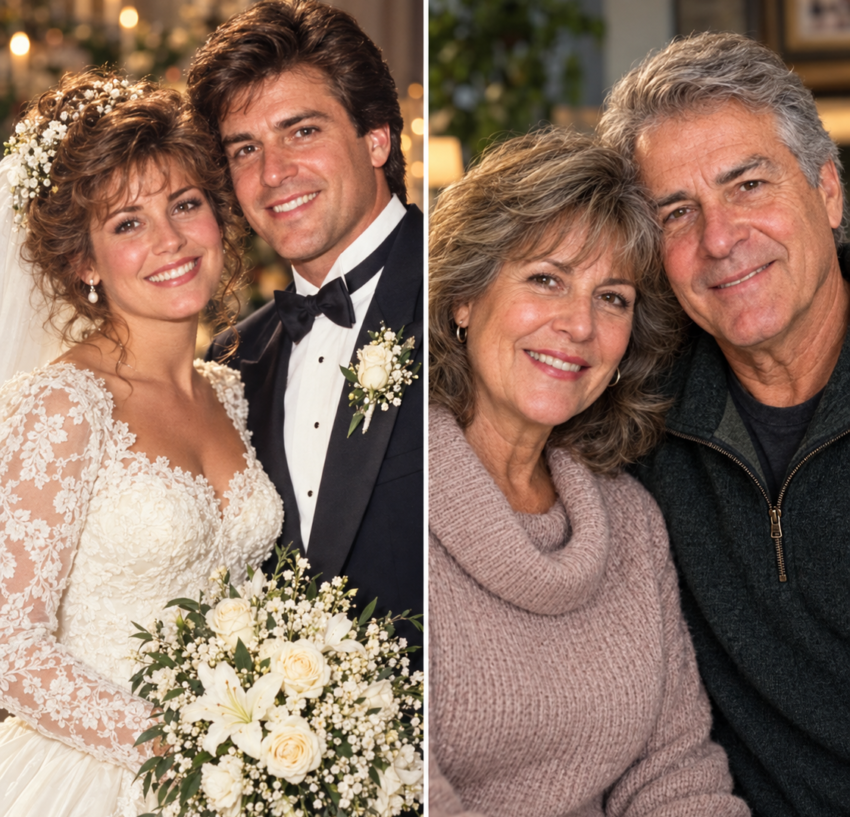
I was sure I knew why my marriage had died. I’d made my peace with it. Then a lawyer handed me a sealed envelope and a small brass key, and everything I believed about the man I’d shared my life with began to come apart.
The Envelope on the Lawyer’s Desk
“Henry left this for you, Loretta. He asked me to make sure you got it if anything happened to him.”
Mr. Collins set a sealed envelope on the desk between us. My husband had been dead for four days. The last real thing I’d ever said to him was that I wanted a divorce.
“When did he write it?” I asked.
The lawyer pushed his glasses up his nose. “Two days after you gave him the papers.”
Something tightened in my stomach. “He came here?”
“He did. He wanted to go over the separation, and he wanted to be certain you received this.” He slid the envelope toward me. “He was very specific. You, and only you.”
I opened it right there. Inside were several folded pages and a small brass key. I knew the handwriting before I read a single word. Neat, careful, the handwriting of a man who had balanced ledgers for a living.
The first line said: My dearest wife…
I nearly laughed. Henry hadn’t called me anything like that in years.
But I kept reading, and somewhere in the first page my hands started to shake. By the last page I was crying so hard I couldn’t catch my breath.
Because the man I’d spent forty years believing never understood me had left something behind that I never could have imagined.
And he’d hidden it in the house I had just walked out of.
Forty Years of “It’s Fine”
I married Henry when I was twenty. I’m sixty now.
Anyone looking at us from the outside would have said we’d done everything right. A lovely home. Three children, Rachel, Michael, and Emma. Five grandchildren. Forty years under the same roof. Henry worked as an accountant, and I taught elementary school. We paid our bills on time and raised good kids.
But once the children grew up and moved out, the house got very quiet, and so did we.
Henry would come home from work and disappear into his study. I’d settle into the living room with a book or the television. Some evenings we didn’t trade ten sentences.
I tried, at first.
“Let’s go away for a weekend,” I’d say.
He’d shake his head. “Why throw money away? We’re perfectly comfortable here.”
I wanted to see Italy. I wanted to see Africa. I wanted, just once, to spend a few days somewhere neither of us had to think about what was for dinner. Henry wanted to compare insurance policies.
Once, I found a little hotel on a lake and showed him the brochure. He studied the price and said, “That’s a new washing machine.”
So we bought a new washing machine. It was a very good washing machine. It never once took me dancing.
After a while, I stopped asking. We stopped going anywhere together at all. We came home from our separate days and spent our evenings in separate rooms.
It was the small things that cut the deepest.
I’d buy a new dress, walk into his study, and turn in a slow circle. “What do you think?”
He’d barely glance up from his desk. “It’s fine.”
Fine. No smile. No you look lovely. I could have walked in wearing a potato sack and gotten the same answer.
He couldn’t even remember my flowers. I’d loved peonies since I was a little girl. On our thirty-eighth anniversary, Henry came home with lilies. Lilies set off my allergies, and I spent most of that evening sneezing into a tissue.
“You really don’t know me at all, do you?” I said, and my eyes filled.
He chuckled. “Loretta, they’re just flowers.”
He thought I was joking. I wasn’t.
Our children assumed we were enjoying a peaceful retirement. The truth was that I felt lonelier sitting next to Henry than I did when I was by myself.
One evening I watched him spend forty-five minutes repairing an old desk lamp. Forty-five minutes of patient, careful attention. He hadn’t given me that much attention in months.
That was the night I knew I couldn’t keep living that way.
I filed for divorce a few weeks before our fortieth anniversary.
When I put the papers in Henry’s hands, the color left his face. “After forty years?”
I fought to keep my voice steady. “You’ve never understood me, Henry. I’m not sure you ever really knew me at all.”
He looked down at the papers for a long time. Then he said, very quietly, “I see.”
That was all. He didn’t argue. He didn’t beg me to stay. Somehow that hurt more than anything else he could have done.
I packed a suitcase and moved into Rachel’s guest room. Henry called the next afternoon. I let it ring. I told myself we’d talk once we’d both had time to cool down.
A week later, Henry had a heart attack. The doctor said it was quick.
I remember Rachel holding me while I said the same thing over and over: “We weren’t finished talking. We weren’t finished.”
At the funeral, people called him dependable. Devoted. A good man. They weren’t wrong. But not one of them knew how lonely I had been, and now there was no one left to tell.
A few days later, Mr. Collins called and asked me to come to his office. That was how I ended up holding the envelope, reading Henry’s words, and feeling the ground shift under my feet.
The Locked Drawer
The first page of the letter was about our wedding day.
Henry remembered things I’d assumed he had long forgotten. My mother crying in the front pew. My veil sitting slightly crooked. How badly his own hands had been shaking. He even remembered that I’d wanted to honeymoon in Italy.
Then I came to a sentence that stopped me cold:
You always wondered why I wouldn’t travel. I blamed the money because I was ashamed of the truth.
What truth?
The next paragraph told me to take the enclosed key and open a locked drawer in his study. I almost smiled through my tears. Even from the grave, Henry couldn’t explain something without a filing system being involved.
I took the key and drove home. Our home.
His study was exactly as he’d left it. His reading glasses lay beside his calculator. His favorite sweater hung over the back of his chair. A half-finished crossword sat on the desk, his pencil resting across it.
Those ordinary little things nearly undid me.
Beneath the filing cabinet was a drawer I’d never paid attention to. The key turned easily.
Inside lay a folder with one word written on the tab: Loretta.
My heart began to pound.
The folder was full of photographs, magazine clippings, and a stack of small notebooks. The clippings were pictures of places I’d talked about for years. Paris. Venice. Africa.
I didn’t understand. This was the man who’d groaned about travel for decades. Why on earth had he been saving these?
I opened the oldest notebook. The first entry was dated nearly twenty years earlier.
Loretta wants to see Paris. Says she could spend a whole day just looking at paintings.
A few pages later:
She saw a photo of Africa today and said she’d love to stand on that continent someday.
I swallowed hard. He’d been listening?
In a newer notebook, I found an entry that made me sit down.
She doesn’t ask about traveling anymore. I told myself she’d lost interest. Now I’m afraid she stopped asking because she already knows what I’ll say.
For years I had been certain Henry never heard a word I said. These notebooks told a different story. I just didn’t know yet how it ended.
I called Rachel.
“Did your father ever say anything to you about taking a trip?”
She paused. “Why?”
“Rachel, please.”
“He asked me whether your passport was still valid.”
I stared at the wall. “When?”
“Last spring.”
“Did he say why?”
“Not really. Just that he was thinking about doing something for your anniversary.”
My chest went tight. “Did you know about his notebooks?”
“What notebooks?”
So he’d kept them from everyone. I made some excuse, hung up, and went back to the letter.
The next pages told me something Henry had never once mentioned in forty years of marriage.
He had grown up poor. When he was twelve, his father lost his job, and for months the family had to live with relatives because they couldn’t make rent. He remembered his mother counting coins at the grocery store before she’d put anything in the cart. He remembered walking to school in shoes with holes in the soles and pretending his feet weren’t freezing.
And he remembered the promise he made to himself back then: his own family would never know that kind of fear.
I believed every dollar I put away made you safer, he wrote. When you asked to travel after we retired, I didn’t see hotels or beautiful cities. I saw money we might need if something went wrong.
I closed my eyes.
He had spent decades bracing for a disaster that never came. And I had spent those same decades waiting for him to finally enjoy the life we’d built together.
What He Saw and Never Said
The pages after that were the hardest to read.
Henry tried to explain how we had drifted. In the early years, work drained him. He spent his days buried in accounts and deadlines, making sure our family stayed secure. By evening he craved silence, and he assumed I wanted the same.
When the children left, the habit simply stayed.
You’d be in the living room reading, he wrote. I thought you liked being on your own. I didn’t realize you’d stopped coming into my study because I almost never looked up when you did.
Then he wrote about my dresses.
He admitted he’d grown careless. He’d seen me every day for so long that he’d stopped really looking. But he remembered the blue dress I wore to Emma’s wedding. He described the way I’d pinned my hair up that day, right down to the little curl I’d left loose at my neck.
I thought you were beautiful. But my head was full of some problem at work, and all I said was “It’s fine.” I assumed you already knew how I felt.
I pressed my hand over my mouth. I had almost returned that dress because he’d seemed so unimpressed.
Then he wrote about the flowers.
He knew I loved peonies. He’d known it since we were young. But somewhere along the way he stopped paying attention. The florist suggested lilies, and he bought them without a second thought, forgetting entirely what they did to me.
When you asked whether I knew you, I thought you were teasing me about a bad choice. I didn’t understand that you were really asking whether I still cared enough to remember.
The tears ran freely now. That was exactly what I had been asking.
At the bottom of the page he’d written one more line:
There’s something else underneath the notebooks.
I went back to the drawer and lifted out everything I’d already looked at.
Underneath lay a bank statement and one more folder.
Inside the folder was a travel plan, written entirely by hand. Four weeks. Florence, Rome, Africa, Paris. Henry had listed hotels, museums, train times, even restaurants, all in his tidy accountant’s columns.
Next to Paris, he’d written: Loretta must see the paintings.
Next to Africa: Find somewhere with a view of Table Mountain in Cape Town. She deserves a breakfast somewhere other than our kitchen.
I laughed out loud, and it came out half a sob.
Then I opened the bank statement.
Years ago, Henry had opened a separate savings account. Every month he’d moved a little money into it. Fifty dollars. A hundred. In the tight months, nothing at all. But he never stopped, and he never closed it. The balance was enough to pay for every line of the trip he’d planned.
My husband had been quietly saving for the journey I’d dreamed about for most of my life.
I looked from the papers to his empty chair.
“Oh, Henry,” I whispered. “Why didn’t you just tell me?”
The answer was on the last page.
My dearest Loretta,
I wanted to surprise you on our fortieth anniversary. I used to imagine handing you the itinerary and watching your face when you realized we were finally going. I thought one wonderful trip might make up for all the years I said no.
Then you handed me the divorce papers, and I finally understood.
You weren’t leaving because we never went to Paris. You were leaving because I’d made you feel that your happiness was an inconvenience. I thought providing for you was enough. I forgot that you needed me to pay attention.
When you showed me your dresses, you wanted your husband to see you. When you asked for a weekend away, you wanted time with me. When you were upset about the lilies, you wanted to know I still remembered the girl I married. And when you sat alone in the living room, you wanted me to come and sit beside you.
I wish I had understood sooner. I spent so long saving for our future that I let our present slip right through my fingers. I always thought there would be time to make it right.
I know now that I should have started years ago.
I don’t know if you’ll want to stay married to me. If you don’t, I won’t stand in your way. But please know that I love you. I just wasn’t very good at loving you the way you needed.
If you’ll let me, I’d like to try again.
And if you can’t, please take the trip anyway.
See the places you’ve dreamed about. Buy the dresses. Order dessert without looking at the price. Don’t spend another forty years waiting for permission to enjoy your life. You deserve every beautiful moment of it.
All my love, Henry
I sat down in his chair, held the letter against my chest, and cried until there was nothing left in me.
Especially Now
Rachel found me there that evening, still in his chair.
I handed her the notebooks and the itinerary without a word. She read through everything in silence, then knelt down and wrapped her arms around me.
“Mom,” she said, “are you going to take the trip?”
I shook my head. “I don’t know.”
“Dad wanted you to.”
“But without him?”
She squeezed my shoulder. “Especially now.”
I looked at Henry’s empty chair for a long time.
His letter didn’t erase the years of silence. It didn’t mean I’d been wrong to feel lonely. Knowing he loved me couldn’t undo all the times I’d wished he would simply show it.
But I finally understood something I hadn’t before. Henry hadn’t been indifferent. He’d been afraid. Afraid of running out of money. Afraid of failing his family. And maybe most of all, afraid to admit he’d forgotten how to be close to me.
I wished with everything in me that we’d been honest with each other while there was still time. I couldn’t change that now.
All I could do was decide what came next.
Three months later, I stood beside a canal in Venice in a blue dress I’d bought just for the trip. Henry’s photograph was tucked inside my purse.
That morning I’d gotten hopelessly lost looking for a café. A woman named Mylah, sixty-three and recently widowed herself, noticed me squinting at my map and walked me there. We ended up sharing a table and a long, slow breakfast.
When I admitted it was my very first time in Europe, she grinned at me. “Well, Loretta, you’ve got some catching up to do!”
I laughed. For the first time in months, laughing didn’t hurt.
Later, standing by the water, I took out Henry’s photo.
“I made it,” I whispered.
I thought about the nervous young man I married at twenty. The father who worked himself to the bone for our children. The husband who stopped noticing the little things. And the man who, at the very end, finally understood what I’d needed from him all along.
I loved Henry.
I was angry with Henry.
I missed Henry.
All three were true, and I was learning to let them be.
Then my phone buzzed. Rachel had sent a picture of my youngest grandson proudly holding up a crayon drawing. It showed Grandma standing next to the Eiffel Tower, and underneath, in big wobbly letters, he’d written:
GO, GRANDMA!
I smiled through my tears.
Henry spent his whole life trying to give me a safe one. His last gift reminded me that I deserved an adventurous one too.
And this time, I wasn’t going to wait.
What This Story Taught Me
Love that is never spoken can feel exactly like no love at all. The people closest to us can’t read the notebooks we keep hidden in a drawer. If you feel it, say it, and say it now.
Fear wears a lot of disguises. Sometimes what looks like stinginess or coldness is really an old wound that was never allowed to heal. Asking “why” can open doors that years of arguing never will.
And it is never too late to start living the life you’ve been putting off. Don’t wait for permission. Don’t wait for the perfect moment. Buy the dress. Take the trip.
[This story is a work of fiction created for entertainment purposes. Names, places, and details are invented, and any resemblance to real persons, events, or places is coincidental.]