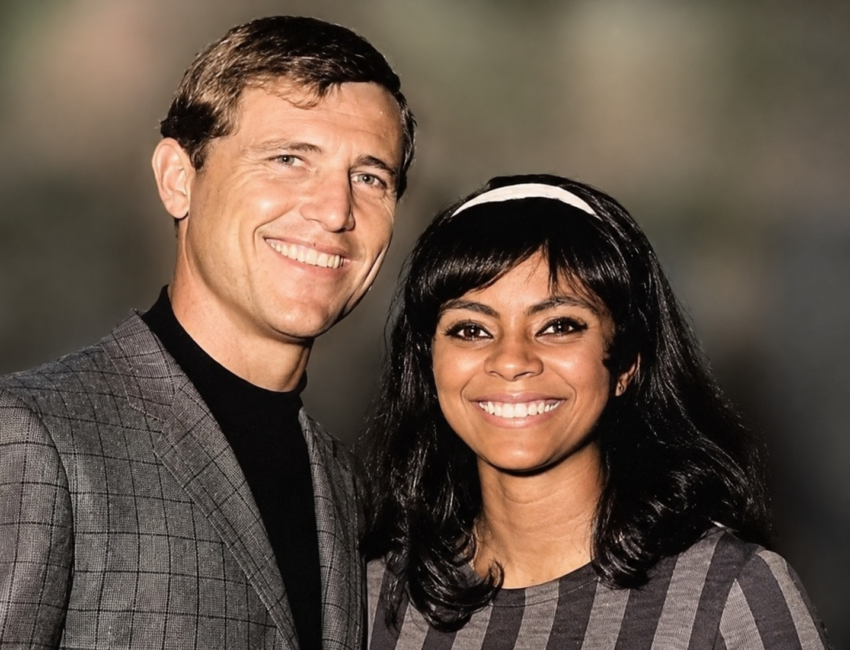
When actress and singer Leslie Uggams fell in love with Australian actor Grahame Pratt, she knew their relationship might face challenges beyond the ordinary concerns of a young couple.
An aunt had once warned her that dating a white man was one thing, but marrying one was something entirely different. The comment stayed with Uggams, especially years later when she began imagining a future with Pratt.
Before making that commitment, she wanted to know something important: Would the people closest to her genuinely welcome the man she loved?
Uggams and Pratt married in 1965. Their relationship went on to span decades, with Pratt eventually becoming her manager and the couple raising two children together.
But their early years also included uncomfortable encounters and hostile letters from strangers who disapproved of their interracial marriage.
The Photograph That Started an Important Conversation
In a 1967 interview with Ebony, Uggams recalled an experience from her teenage years that had left a lasting impression.
She had been dating a white boy who sent her a color photograph. She thought he was handsome and enjoyed receiving the picture.
But when her aunt saw it, her reaction surprised Uggams.
Her aunt made a distinction between dating a white man and choosing one as a husband. She was willing to accept the idea of a teenage relationship but expected Uggams to marry a Black man when the time came to settle down.
For Uggams, the photograph had simply been a reminder of a boy she liked. Her aunt’s response turned it into a much larger conversation about marriage, race, and family expectations.
That memory would become especially relevant when she later fell in love with someone who was not Black.
A Reunion in Sydney Changed Everything
Uggams and Pratt had known each other from their younger years at the Professional Children’s School in New York.
However, it took a journey to Australia for their paths to cross again.
While Uggams was performing in Sydney during a tour, she unexpectedly encountered Pratt, who was also an actor.
Their reunion developed into something neither could have easily predicted.
Uggams was 21, and she later remembered being surprised by the strength of her feelings.
“I found myself truly falling for him, which was quite a thing for me to comprehend,” she recalled.
After Uggams left Australia, a year passed before she saw Pratt again. By then, their connection had become serious enough for them to consider marriage.
There was also a practical question to resolve. Uggams’s professional life was based in the United States, meaning Pratt might have to move there if they were going to build a life together.
For Uggams, that made his visit to New York particularly important.
She Wanted Her Family to Truly Welcome Him
The couple became engaged and spent five months preparing for their marriage.
During that period, Pratt visited Uggams in New York. He had an opportunity to meet the people who were important in her life, including her friends and relatives.
But the visit meant more to Uggams than simply introducing her fiancé.
She wanted to see how her family would respond to him in person, especially those who had previously expressed reservations about interracial relationships.
As she explained, she wanted to know whether they would genuinely welcome Grahame rather than merely tolerate his presence.
That distinction mattered.
A polite greeting could make an evening comfortable, but a sincere welcome would help her future husband feel accepted as part of the family.
Fortunately, the visit went better than she had feared. Pratt felt comfortable around her friends, and they liked him.
Uggams also believed his Australian background made a difference. She felt that he approached the situation without some of the racial self-consciousness she associated with white American men of that era.
Their Marriage Faced More Than Family Questions
Uggams and Pratt married in 1965.
Looking back years later in an interview with PEOPLE, she described the experience as less difficult than she had initially expected.
“It was not as terrible as I thought it to be,” she recalled.
The acceptance she had witnessed during Pratt’s visit had reassured her that the people close to her could embrace their relationship.
But not everyone responded with kindness.
Uggams recalled receiving anonymous letters from people who objected to her marriage. Some arrived while she was touring and performing across the United States.
One particularly unpleasant letter reached her at a club in Detroit.
The messages were not simply expressions of disagreement. They contained racist language and made their objections to the couple’s relationship deeply personal.
Although those incidents were painful, Uggams remembered them alongside the support she received from people who knew her and Pratt personally.
Her experience reflected a difficult reality for interracial couples during that period: acceptance in one circle did not mean prejudice had disappeared elsewhere.
Grahame Pratt Became Her Manager and Life Partner
As their relationship developed, Pratt became more than Uggams’s husband. He eventually took on the responsibility of managing her career.
Their lives became closely connected through both family and professional work.
Meanwhile, Uggams continued building an impressive career in entertainment.
In 1968, she won the Tony Award for Best Actress in a Musical for her performance in Hallelujah, Baby! The following year, she hosted The Leslie Uggams Show, becoming a groundbreaking presence in network television.
Her career later brought her to audiences through major productions, including the landmark television miniseries Roots and, decades afterward, the Deadpool films. Her official biography highlights a career spanning music, Broadway, television, and film.
Uggams and Pratt also built a family. Their daughter, Danielle, was born in 1970, followed by their son, Justice, in 1975. Pratt remained both her husband and a significant professional partner.
The Memories That Explain Their Lasting Relationship
When Uggams reflected on the early years of her marriage, she returned to several moments that had shaped her decisions.
She remembered the photograph that had surprised her aunt, the unexpected reunion with Pratt in Australia, and the uncertainty she felt before bringing him home to meet her family.
She also remembered what happened when he finally arrived.
Her friends liked him. He felt comfortable among the people she cared about, and the welcome was warmer than she had feared.
The hostile letters showed that prejudice remained a part of their experience, but they did not define the entire story of their relationship.
For Uggams, the important question had been whether the man she loved could become part of the life she already had.
Their marriage, which began in 1965, grew into a partnership that included family, career, and decades of shared experiences.
And perhaps the most meaningful part of her recollection was not the attention their interracial marriage attracted, but the simple human moment at its center: a young woman wanted the people she loved to accept the person she had chosen to love.
Sources and further reading: