For twenty-six years, my father knew almost nothing about the life I had built. Then, outside the White House, a general greeted me by rank—and my father finally realized how much he had missed.
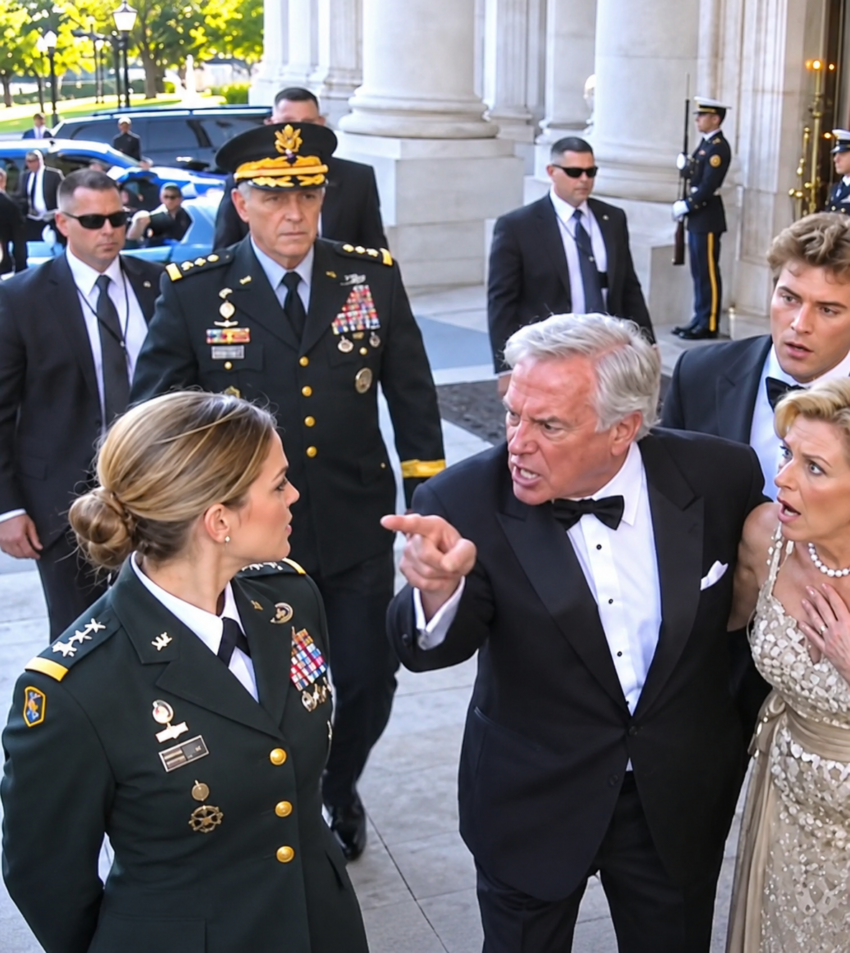
My father, Arthur Mercer, was standing with his hand extended when General Vance approached us outside the White House.
Arthur wore the confident smile I remembered from years ago. He had spent much of his life moving among powerful people, and he clearly expected the general to greet him.
But General Vance walked straight past his outstretched hand.
He stopped in front of me.
“Colonel Mercer, it’s good to see you again.”
I returned his handshake.
“Thank you, General. It’s an honor to be here.”
Beside me, my father went completely still.
My brother Trevor stared with his mouth slightly open. Evelyn, who had looked so pleased with herself moments earlier, glanced toward Arthur as though waiting for an explanation.
For the first time in twenty-six years, my father was looking at me as someone he didn’t recognize.
And all it had taken was two words.
Colonel Mercer.
The Life My Father Had Never Tried to Understand
Twenty-six years earlier, I had chosen a career in the Army instead of the future my father wanted for me.
Arthur was a billionaire businessman who had built an empire and expected me to become part of it.
But I wanted a different life.
I wanted to serve my country, accept responsibilities of my own, and build a career that belonged to me rather than one inherited from him.
My decision cost me my relationship with my father.
For more than two decades, we remained estranged.
During that time, my military career progressed. I took on responsibilities, faced challenges, learned from the people around me, and eventually earned the rank of colonel.
None of it happened overnight.
There were difficult years when determination mattered far more than recognition. There were decisions I had to live with long after the excitement of making them had faded.
Through it all, I continued building the life I had chosen.
And Arthur remained almost entirely outside it.
That was why the moment outside the White House felt so strange.
My father had once believed I was throwing away my future.
Now he was discovering that I had built one without him.
“You’re a Colonel?”
Arthur finally found his voice.
“You’re a colonel?” he stammered.
I looked at him.
For a moment, I considered explaining everything.
I could have told him about the years of service, the responsibilities I had accepted, and the long road that had brought me to Washington.
I could have asked what he thought I had been doing all this time.
But before I spoke, General Vance turned toward him.
“Yes, Colonel Mercer is one of the finest officers I’ve had the privilege to work with. Her leadership and dedication have been invaluable to the Army.”
His words were calm and sincere.
That made them mean even more.
General Vance knew my work. He knew the effort behind the rank and the responsibilities that came with it.
He wasn’t praising me to impress my family.
He was speaking about an officer he respected.
I had imagined my father finally recognizing my achievements many times over the years.
But I had never imagined that recognition arriving through someone else’s introduction.
Arthur cleared his throat.
“I… I didn’t realize,” he said.
I believed him.
He truly hadn’t realized.
For twenty-six years, he had missed the experiences that shaped me into the person standing before him.
I could have made that moment painful for him.
Instead, I gave him a simple answer.
“Twenty-six years is a long time, Arthur. Things change.”
The General Was Waiting for Me
General Vance gestured toward the White House entrance.
“Shall we head inside, Colonel? The President is eager to meet with you and discuss the new initiatives.”
“Of course, General.”
His words reminded me why I was there.
I had come prepared to discuss important work. There were initiatives to consider, people to meet, and responsibilities waiting beyond those doors.
The encounter with my family had been unexpected, but it was not the purpose of my evening.
As Vance and I began walking toward the entrance, I glanced behind me.
Arthur remained where we had left him.
Evelyn had turned away. Trevor was still staring at me, visibly bewildered.
I stopped long enough to offer one final remark.
“Enjoy the event,” I told them. “And remember, you’re not the only VIP here.”
Then I turned and caught up with the general.
I won’t pretend the moment brought me no satisfaction.
For years, I had wanted my father to understand that my decision to join the Army had not been a mistake.
Now he had heard a respected general acknowledge the career I had built.
But the surprising part was how little I needed to add.
I didn’t have to defend my choices.
My life had already spoken for itself.
Inside the White House, My Work Came First
The corridors were busy as General Vance and I made our way farther inside.
Conversations filled the halls, and people moved between meetings and introductions.
I focused on the initiatives we had come to discuss.
Throughout the evening, I spoke with dignitaries and leaders who were interested in my experience and the work ahead.
They asked questions about my responsibilities, listened to my answers, and discussed what might come next.
I found myself enjoying those conversations.
After the encounter outside, there was something especially meaningful about speaking with people who understood that my rank represented years of commitment.
My father had needed to ask whether I really was a colonel.
Inside, the conversations began with that fact already understood.
People wanted to know what I thought, what I had learned, and what could be accomplished.
Their questions reminded me that the career I had built was not simply about earning a title.
It was about doing work that mattered.
And the respect I had earned existed long before Arthur discovered it.
Twenty-Six Years of Waiting for One Moment
At different points during the evening, my thoughts returned to the entrance.
I could still picture Arthur standing with his hand extended.
It was such a small moment.
A general had approached, my father had expected a greeting, and the general had greeted me instead.
Yet that brief exchange represented something much larger.
For twenty-six years, I had imagined what it might take for my father to see me differently.
I had wondered whether he would ever recognize the value of the life I had chosen.
When that recognition finally became possible, I discovered something unexpected.
I no longer needed it the way I once had.
I appreciated General Vance’s praise because it came from someone who knew my service.
But I didn’t need my father’s surprise to confirm my worth.
The people I had worked alongside already knew what I had accomplished.
They had seen the difficult decisions, the long hours, and the responsibilities that came with leadership.
Their respect had been part of my life for years.
Arthur was simply hearing about it for the first time.