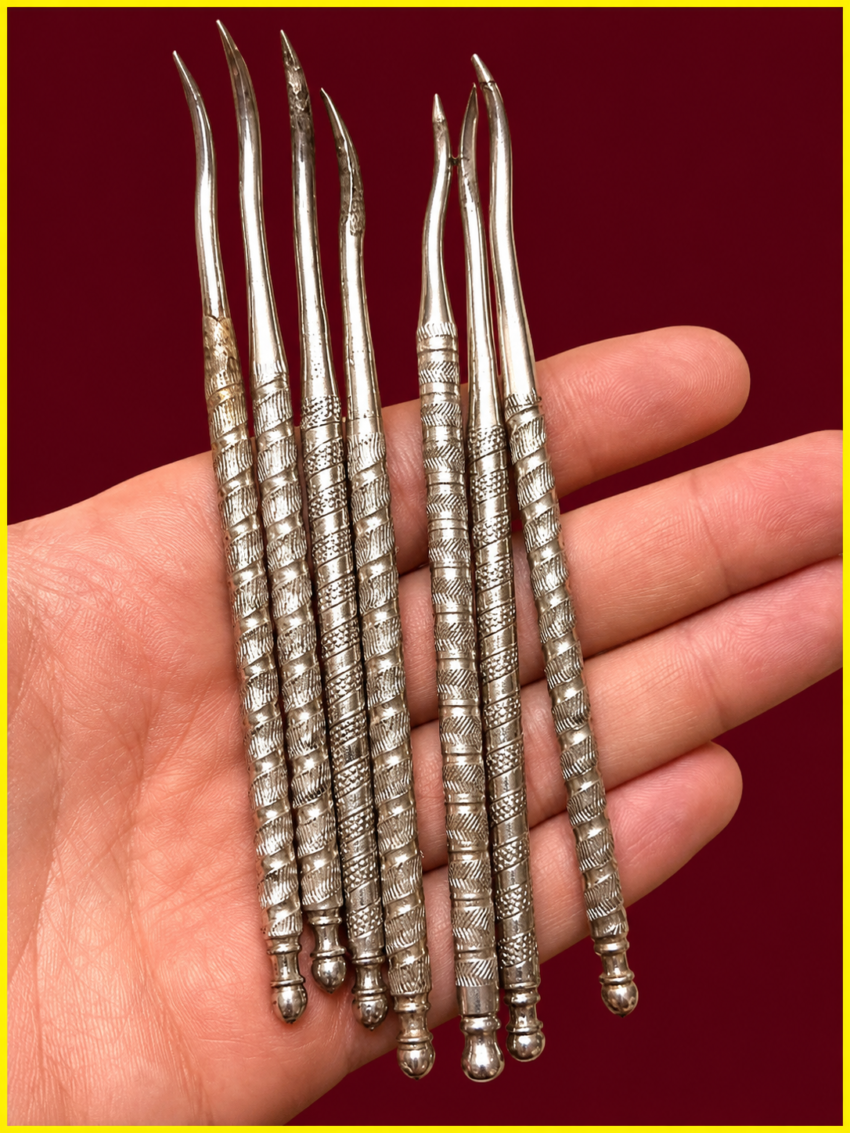
Sometimes, the most unusual discoveries are hiding in ordinary family belongings. An old box of keepsakes may contain photographs, handwritten notes, jewelry, or strange little objects that leave younger generations wondering what they were originally used for.
Among forgotten kitchen treasures, a particularly curious set of slender metal utensils can easily spark questions. They may look like miniature forks, decorative picks, or even tools with no obvious connection to food.
But these unusual objects often have a surprisingly practical history.
What Are These Strange Metal Utensils?
Those slender metal instruments are likely traditional nut picks, small utensils designed to help remove nutmeat from the tight crevices of cracked shells.
Before shelled nuts became widely available in convenient packages, families frequently purchased nuts in their natural shells. Cracking the shell was only the first step. Smaller pieces of edible nutmeat could remain trapped inside, making them difficult to remove with fingers alone.
A nut pick was designed to solve that problem.
Its narrow, pointed end could reach into small spaces inside the shell, helping loosen and retrieve pieces that would otherwise be difficult to access.
How Nut Picks Were Used at the Dinner Table
Using a nut pick was a straightforward process.
First, a nutcracker was used to break open the hard shell. Once the shell was separated, the pointed end of the pick could be carefully inserted into the remaining sections to remove the edible pieces.
Walnuts and pecans were particularly well suited to this kind of tool because their shells often contain irregular cavities where pieces of nutmeat can become trapped.
These small utensils made the process easier and allowed people to enjoy whole nuts without struggling to extract every piece by hand.
Why These Old Tools Often Look So Elegant
Vintage nut picks weren’t always plain or utilitarian.
Many older examples featured decorative handles, polished metal surfaces, engraved patterns, or unusual designs. Some were produced as part of matching nutcracker sets and were intended to be displayed or used during meals and gatherings.
Their appearance reflected an era when even small dining accessories could be designed with attention to craftsmanship and presentation.
Rather than being hidden away as ordinary kitchen tools, these utensils could become part of a carefully arranged dining table.
Some antique nut picks were made from silver-plated materials and featured distinctive ornamental handles, making them attractive to collectors today.
Whole Nuts and the Traditional Family Table
Eating whole nuts once involved a little more preparation and patience.
Families would crack nuts, separate the shells, and carefully remove the edible portions. The process could become part of a relaxed gathering, with bowls of nuts placed on tables during holidays, conversations, or informal visits.
Today, most people buy nuts already shelled, making these specialized utensils less familiar.
However, whole nuts such as walnuts, almonds, pistachios, and pecans remain popular because they provide fiber, plant-based protein, healthy fats, and a variety of nutrients.
Choosing whole nuts can also offer a convenient snack option, although portion sizes and individual dietary needs still matter.
Why Antique Nut Picks Are Still Appreciated
Vintage nut picks continue to attract antique enthusiasts and collectors because of their craftsmanship, distinctive designs, and connection to traditional dining habits.
A well-preserved set may serve as a decorative addition to a dining table, an antique display, or a reminder of how everyday household tasks once required specialized tools.
For families discovering these objects among old belongings, their value may extend beyond their appearance or age.
They can represent a connection to previous generations and the everyday routines that shaped family life.
A Small Tool With a Surprisingly Interesting History
What initially looks like an unfamiliar metal utensil may actually be a carefully designed tool with a very specific purpose.
Vintage nut picks helped people extract edible pieces from hard shells, made serving whole nuts easier, and sometimes added a touch of elegance to the dining experience.
The next time you discover a set of slender metal picks inside an old family box, take a closer look.
You may not have found something mysterious or useless after all.
You may have uncovered a small piece of the history of the family kitchen.