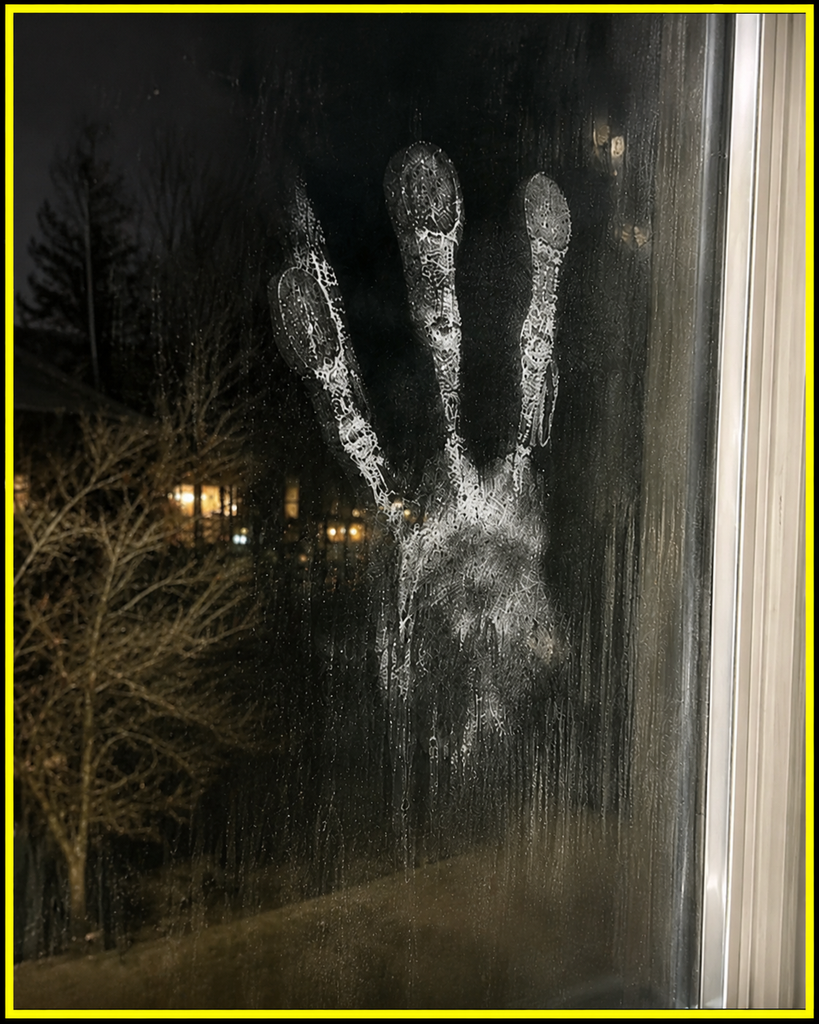
Discovering a strange, oversized hand-like mark on the outside of an upstairs bedroom window can be an unsettling experience. The impression may appear surprisingly human, especially if it seems to show only four distinct fingers. For anyone who notices such a mark late at night or early in the morning, the sight can easily spark questions about how something reached the window in the first place.
However, unusual marks on elevated windows may have a surprisingly ordinary explanation: wildlife.
Some nocturnal animals are remarkably capable climbers. Raccoons and opossums, in particular, can navigate exterior walls, gutters, siding, trees, and nearby structures to reach areas that might seem inaccessible to people.
How Could an Animal Reach an Upstairs Window?
Raccoons are well-known for their climbing abilities. Their strong limbs, sharp claws, and dexterity allow them to climb trees, fences, and parts of residential buildings. Gutters, downspouts, siding, and nearby branches can sometimes provide routes toward higher windows.
Opossums are also capable climbers. Although their movements may be less agile than those of raccoons, they can still climb trees and structures, making an elevated window less unusual than it initially appears.
If an animal has been moving along a wall or attempting to reach a roof, it might leave marks on glass surfaces along the way.
Why Does the Mark Look Like a Human Hand?
Animal footprints can sometimes look remarkably similar to human handprints. Raccoon tracks, for example, are often described as hand-like because their toes are long and separated, creating an impression that resembles fingers.
Both raccoons and opossums generally have five digits on their feet. Nevertheless, a print on glass may not capture all of them clearly.
Several factors can alter the appearance of a mark:
- Partial impressions: Some digits may not make full contact with the surface.
- Overlapping marks: Multiple prints may combine into one unusual shape.
- Smudges and moisture: Water, dust, or condensation can obscure parts of a print.
- Movement across the glass: An animal’s foot may slide, creating an elongated or distorted impression.
These factors could make a five-digit animal print appear to have only four visible fingers.
What Should You Look for Around the Window?
If you want to investigate the unusual mark, check the surrounding area carefully. Look for possible climbing routes, including nearby tree branches, gutters, downspouts, siding, fences, or structures that could provide access.
You may also notice scratches, additional prints, disturbed materials, or other signs of wildlife activity.
If the area appears to be a regular route for an animal, observing it from a safe distance during nighttime hours may help identify the visitor.
A Strange Mark, but Possibly a Simple Explanation
A hand-like impression on an upstairs window may initially seem mysterious, but climbing wildlife could provide a plausible explanation. Raccoons and opossums are capable of reaching elevated areas, and their prints can become distorted when left on glass.
Without examining the mark directly, it is impossible to determine exactly what caused it. Still, investigating the surrounding area and looking for evidence of animal activity may help turn an unsettling discovery into an ordinary wildlife mystery.