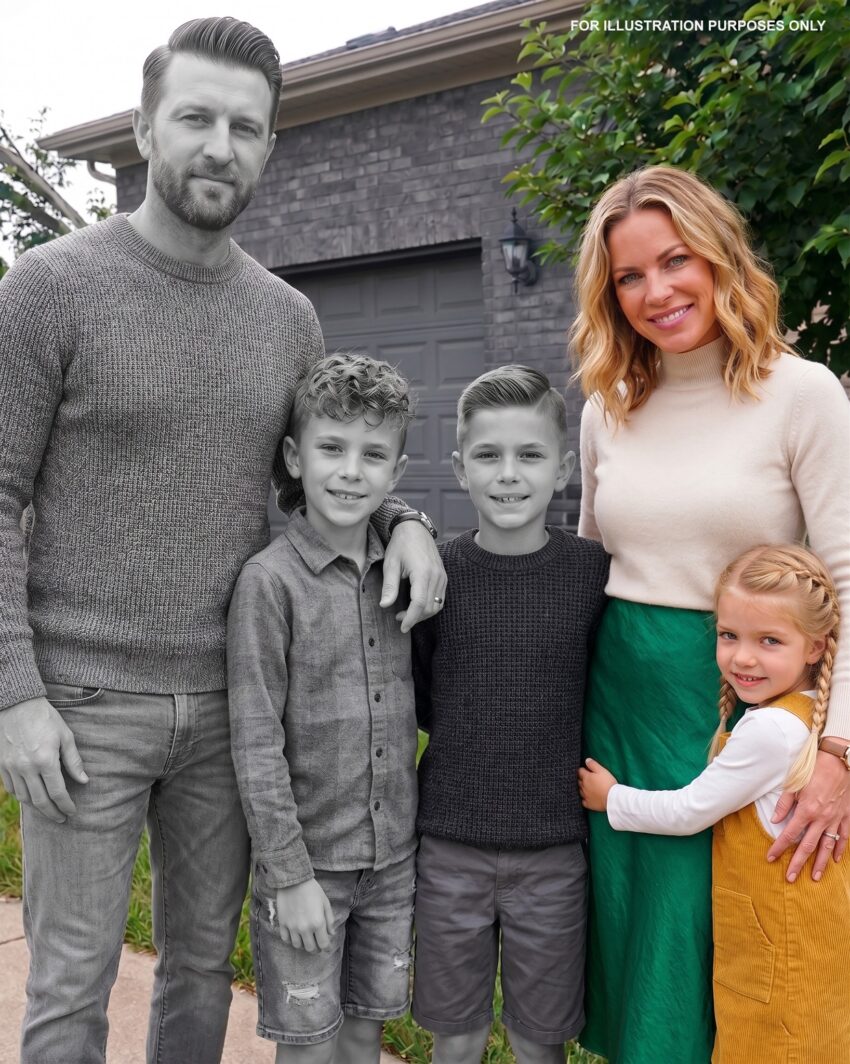
Seven years ago, my husband disappeared with our twin boys on what should have been an ordinary summer morning.
He told me they were going fishing.
He kissed our daughter on the forehead, teased the boys about who would catch the biggest fish, smiled at me over his coffee cup, and promised they would all be home before dinner.
Then he walked out the front door.
And vanished from our lives.
By nightfall, authorities found Nolan’s boat drifting near the northern edge of Lake Monroe after a violent storm tore through the area that afternoon. A fisherman later reported seeing a small boat struggling against dangerous currents around the same time Nolan would have been out there.
The boat showed light damage along one side.
Three life jackets remained tucked beneath the seats.
Nolan’s phone last pinged from deep water before disappearing completely.
There were no bodies.
No witnesses.
No goodbye.
Just silence.
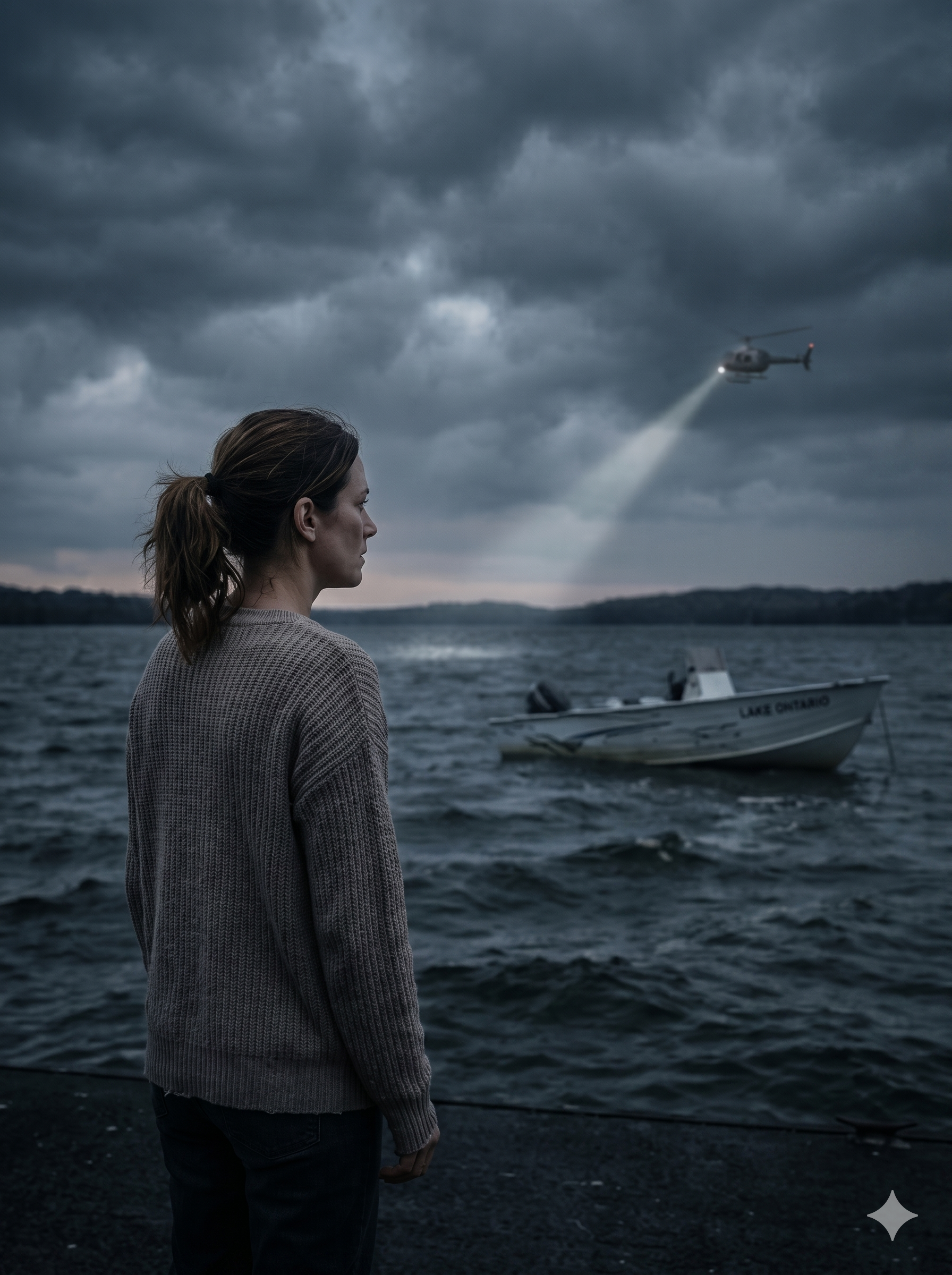
The investigation was massive at first. Divers searched the lake. Helicopters scanned the surrounding woods. Detectives interviewed neighbors, coworkers, relatives — anyone who might know something.
For a short time, investigators even considered the possibility Nolan staged the disappearance intentionally.
But there was nothing supporting that theory.
No hidden accounts.
No packed bags.
No evidence he planned to leave.
And eventually, the storm became the explanation everyone settled on because grief prefers simple endings when the truth becomes too exhausting to carry.
After eighteen months, the case was formally reclassified as a presumed accidental drowning.
Eventually, it went cold.
My name is Kate.
I’m forty years old now.
And for seven years, I tried forcing myself to live inside that version of reality even though some part of me never fully believed it.
The morning Nolan disappeared had felt painfully ordinary.
The twins — Miles and Owen — were nine years old and already arguing loudly before sunrise about who would catch the first fish. Sophie, my six-year-old daughter, stood near the back door in her pajamas clutching the frame like she could physically stop them from leaving.
“Please let me come this time,” she begged.
Nolan crouched beside her and brushed her hair back gently.
“Next year, Peanut,” he said softly. “You’re still too little for the boat.”
He said it so casually.
Like there would always be another year waiting for us.
He kissed her forehead, laughed with the boys, and looked back at me.
“We’ll be home before dinner,” he promised. “And I’m calling it now — Miles is bringing home weeds instead of fish again.”
We all laughed.
That was the last normal moment of my old life.
By evening, something felt wrong.
Nolan’s phone rang twice before disconnecting entirely. The storm had already passed by then, leaving behind the kind of unnatural silence that feels wrong after chaos.
When the sheriff finally called later that night, some terrible instinct inside me already knew.
They found the boat.
Empty.
For months afterward, my life became interviews, paperwork, and impossible questions.
Then slowly, the searches stopped.
The detectives stopped calling.
People stopped saying “missing” and started saying “gone.”
I tried moving forward because survival leaves you very little choice.
I packed lunches.
Paid bills.
Helped Sophie with homework.
Pretended routines could somehow hold grief together long enough for me to function.
But the absence never softened.
It simply spread itself quietly through every corner of life until it became part of the house itself.
Sometimes I drove back to the lake and sat alone staring at the water for hours hoping it might eventually give something back.
It never did.
There’s something else important you need to understand.
I raised Miles and Owen from the time they were three years old. I was the one who bandaged scraped knees, read bedtime stories, taught them to ride bikes, and tucked them in every night.
But legally?
I wasn’t their mother.
Nolan had full custody after divorcing their biological mother years earlier, but I never officially adopted them. At the time, it didn’t seem important because we were already a family in every way that mattered emotionally.
I had no idea someday that technicality would destroy my entire life.
Seven years passed.
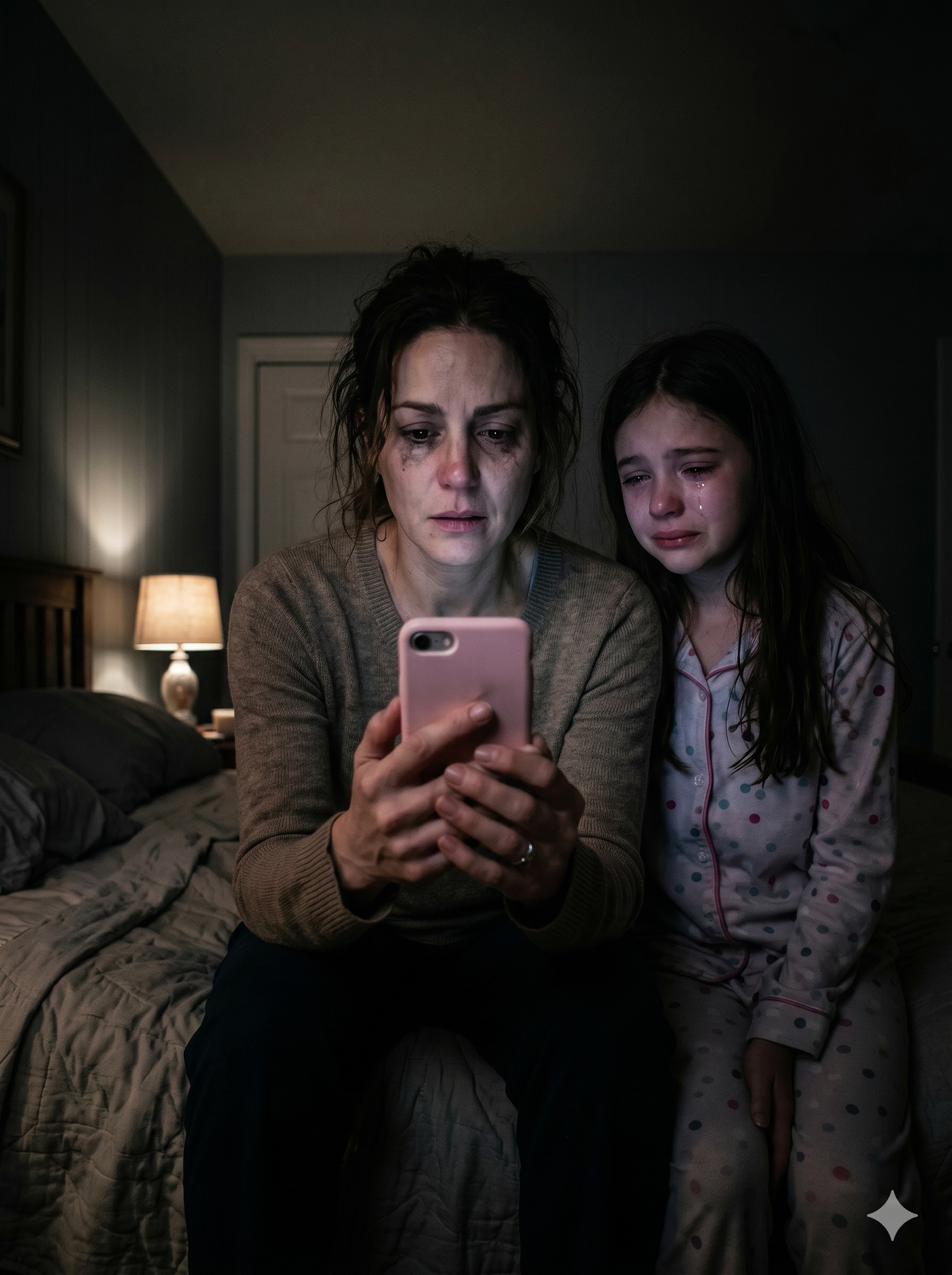
Then one quiet Saturday evening, Sophie walked into my bedroom holding a small pink phone.
“I found this in the closet,” she said softly. “It still works.”
At first, I barely looked up from folding laundry.
But something about her expression made me stop.
“There’s a video on it,” she whispered. “Dad sent it to me the night before they left.”
The room went completely still.
“What?”
Her eyes filled instantly with tears.
“He told me not to show you until I was older.”
My chest tightened painfully.
“Why would he say that?”
She swallowed hard.
“He said you might hate him.”
My hands were shaking by the time I took the phone.
Then I pressed play.
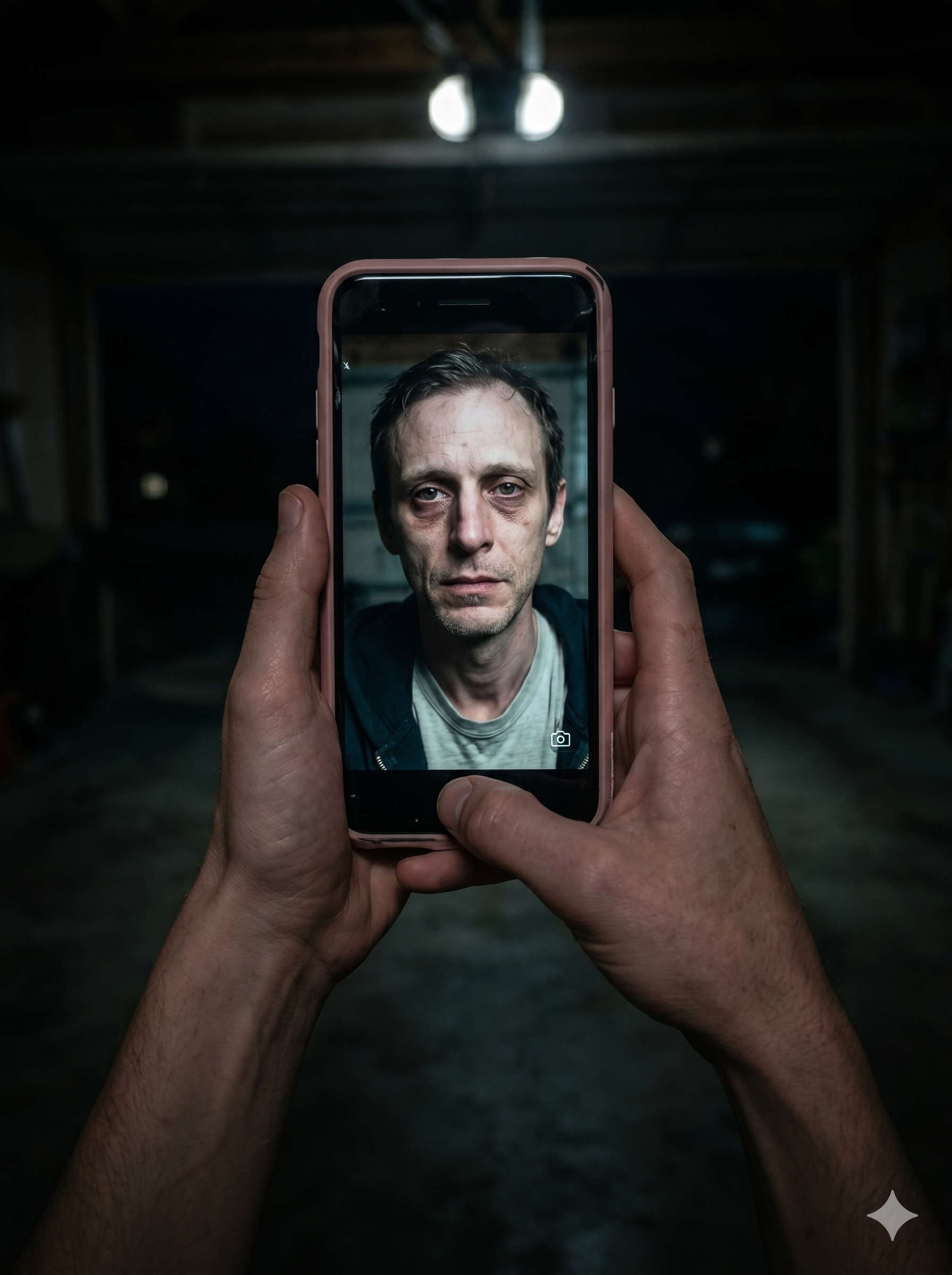
The video opened inside our garage.
Nolan stood facing the camera beneath dim overhead lighting looking thinner than I remembered. Older somehow. Exhausted in ways I never noticed before.
“Kate,” he said softly.
Just hearing his voice again after seven years nearly destroyed me.
“If you’re watching this,” he continued carefully, “then enough time has passed that things have settled a little.”
Then he inhaled slowly and shattered my reality all over again.
“I’ve been diagnosed with stage four pancreatic cancer.”
The words didn’t even feel real.
“I found out three months ago. It’s advanced. Treatment might buy me some time, but not much.”
I physically couldn’t breathe for a second.
Then came the part that hurt even worse.
Nolan explained he transferred custody of the twins back to their biological mother, Meryl, through an expedited medical petition because he didn’t have time for a court battle.
“You weren’t included,” he admitted quietly. “Legally, you weren’t their parent. I knew if I told you, you’d fight it. And I wasn’t going to live long enough to finish that fight.”
The room blurred around me.
“I thought this was the least painful option,” he whispered. “A clean break. You’d grieve… then rebuild without being trapped inside everything I was about to leave behind.”
A clean break.
That phrase hit harder than anything else.
Because for seven years, I buried him.
For seven years, I mourned children who were still alive somewhere.
And he decided that for me.
“I know you’ll hate me,” Nolan said quietly. “Maybe you should.”
Then the screen went black.
For a very long time, neither Sophie nor I moved.
Finally, she whispered:
“Mom… what does this mean?”
I stood up slowly.
“It means,” I said shakily, “we’re going to find out the rest.”
The next morning, we drove three hours to Meryl’s house.
The second she opened the door and saw me, her entire face changed.
She knew exactly who I was immediately.
And after watching Nolan’s video, she stopped trying to hide anything.
Inside her home, photographs filled the walls.
Miles and Owen growing older.
Graduations.
Birthdays.
Vacations.
And Nolan beside them in several photos too — thinner each time, but undeniably alive long after I buried him emotionally.
Something inside me cracked open.
“I raised them,” I whispered. “I loved them like they were mine. What did I do to deserve this?”
“You did nothing,” Meryl answered quietly. “None of this was your fault.”
Then slowly, she filled in the missing years.
After his diagnosis, Nolan contacted her desperate to reconnect the boys with their biological mother before he died. At first, she refused because she knew disappearing would devastate me. But Nolan already finalized the legal custody transfer and insisted he didn’t have enough time left for drawn-out emotional battles.
“So instead,” I said quietly, “he made the decision alone.”
She nodded sadly.
“He stayed with the boys as long as he could. Treatments. Hospitals. Everything.”
Then she told me something that nearly broke me again.
The boys wanted to contact me during the first year after disappearing.
But Nolan convinced them staying away would protect me from reopening grief before I healed.
Of course he did.
Even dying, Nolan still believed he could carry everyone’s pain alone if he just made enough decisions quietly in the background.
That afternoon, Sophie and I visited Nolan’s grave.
Seeing his name carved into stone didn’t feel like closure anymore.
It felt like standing beside a lie built from love, fear, and impossible choices.
Back at Meryl’s house, she handed me an envelope Nolan left behind along with documents for a financial account created in my name.
“I was supposed to contact you eventually,” she admitted quietly. “I just didn’t know when.”
The boys were overseas at university now.
“They know about you,” she said gently. “They always have. And if you’re ready… I think they’d want to know you again.”
The drive home felt impossibly quiet.
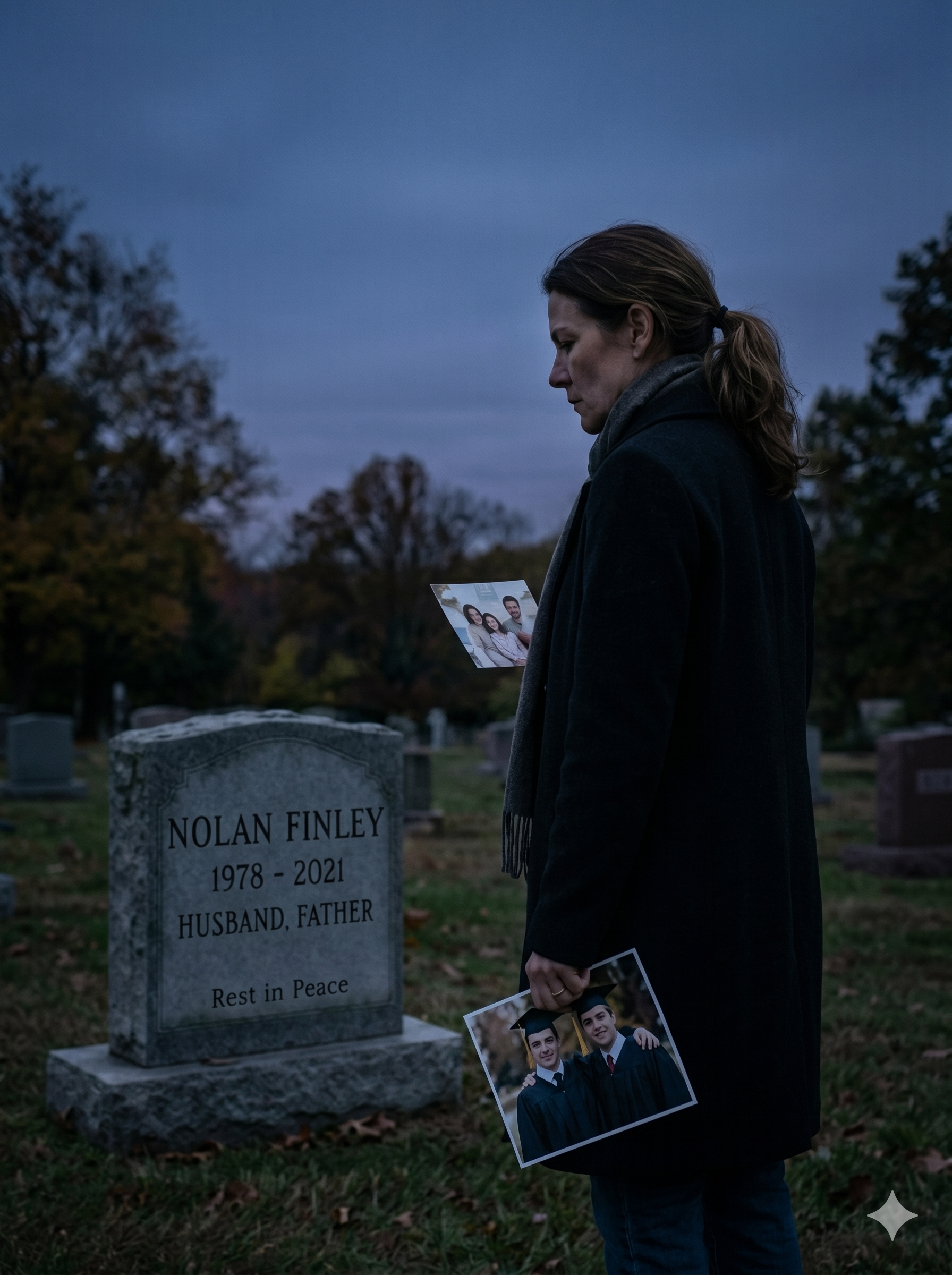
A photo of Miles and Owen sat in Sophie’s lap the entire way. Two grown young men smiling back at us from a life we were never allowed to witness.
At a stoplight, Sophie stared at the picture for a long moment.
“Will I meet them again someday?” she whispered.
I tightened my hands around the steering wheel.
Then finally answered honestly.
“Yes,” I said softly. “I think you will.”
That night, I sat alone holding Nolan’s final letter.
I still haven’t opened it.
Maybe someday I will.
Maybe I won’t.
Because understanding why someone hurts you does not erase the damage.
Nolan didn’t just disappear.
He rewrote my life without asking permission.
He turned grief into something artificial and left me trapped inside it for seven years.
But at least now, the waiting is over.
I’m no longer staring at the lake hoping something lost might return.
I’m grieving something real.
And maybe healing doesn’t begin with forgiveness after all.
Maybe it begins the moment truth finally arrives — painful, imperfect, and far too late — and you decide to keep moving forward anyway.